Collegium Helveticum
Switzerland

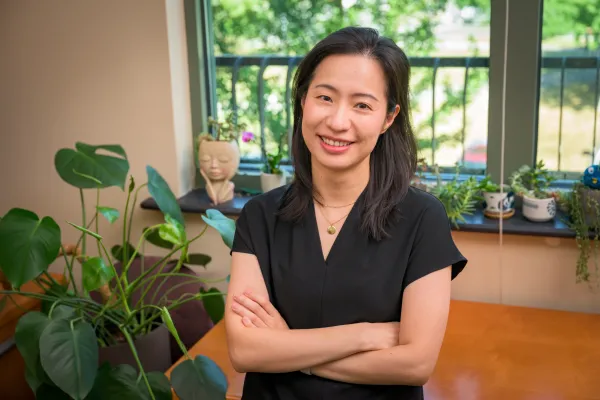
Mi-Ling Li is an environmental scientist who studies how global contaminants move through interconnected air, land, and ocean systems. Her research examines how these movements reshape pollutant pathways and create major ecological and societal consequences.
Her work addresses how rapid environmental change, including climate shifts and the widespread use of synthetic chemicals, alters the transport, transformation, and exposure pathways of contaminants.
Integrating analytical chemistry, isotope geochemistry, and spatial-statistical modeling, Mi-Ling takes a transdisciplinary approach to link contaminant sources and environmental processes with ecosystem dynamics and human exposure. Her research bridges environmental chemistry, oceanography, toxicology, and public health.
Mi-Ling’s current work focuses on mercury and per- and polyfluoroalkyl substances (PFAS), with an emphasis on tracing contaminant sources, understanding bioaccumulation in aquatic food webs, and identifying exposure pathways relevant to wildlife and human communities.
This project investigates how mercury and selenium cycle through marine ecosystems and how their interactions influence the safety of seafood consumed worldwide.
In collaboration with her Associate Fellow Lenny Winkel, Mi-Ling Li will study the global biogeochemical cycling of mercury and selenium and their interactions in ocean environments. Mercury is a potent neurotoxicant that accumulates in marine food webs and poses risks to human health through seafood consumption. Selenium, an essential trace element, can counteract some of mercury’s toxic effects under certain conditions.
Combining Winkel’s expertise in selenium geochemistry and global contaminant modeling with Mi-Ling’s work on mercury cycling and environmental health, the project will examine how these two elements are distributed, transformed, and accumulated in marine organisms. The research will focus on the pathways that shape mercury and selenium levels in seafood species consumed around the world. By clarifying how these elements interact in marine food webs, the project aims to improve risk assessment approaches and inform policies that support global seafood safety.
marine biogeochemistry; mercury cycling; selenium geochemistry; environmental health; seafood safety; food web dynamics; neurotoxicology; trace elements; ocean chemistry; contaminant modeling; global health; risk assessment; environmental policy; marine ecosystems; bioaccumulation; human health; interdisciplinary environmental science; geochemistry; public health.