Israel Institute for Advanced Studies
Israel

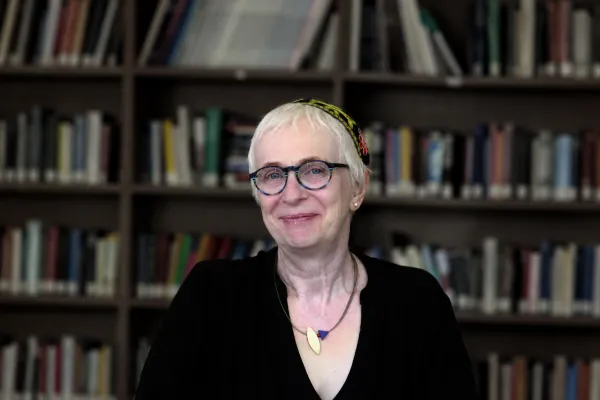
Since 2003, Hanna Liss has been a full professor and the head of the Department of Bible and Jewish Interpretation of the Bible at the University of Jewish Studies Heidelberg and the University of Heidelberg in Germany. Her main research areas are the study of medieval Jewish exegesis, the study of the Masorah in Western European Bible and commentary literature, and modern Jewish Bible exegesis and hermeneutics.
She is the Principal Investigator of two long-term projects:
Recent book publications are Philology and Aesthetics. Figurative Masorah in Western European Manuscripts, Frankfurt am Main et al.: Peter Lang, 2021; Jüdische Bibelauslegung (UTB Jüdische Studien), Tübingen: Mohr Siebeck (2019).
Medieval Ashkenazi scholarship increasingly turned from rabbinic literature toward biblical interpretation. Within this development, the Masorah—originally a collection of linguistic, grammatical, and statistical annotations associated with the transmission of the biblical text—acquired new exegetical, theological, and halakhic functions.
Hanna Liss’s research at IIAS focuses on the Ashkenazi Masorah Tradition. In Ashkenazi Bible manuscripts, masoretic lists were transformed into masora figurata: micrographic compositions shaped by Romanesque and Gothic artistic conventions. Beyond decoration, such configurations could convey grammatical instruction, biblical interpretation, and religious knowledge. At the same time, scholars such as Eleazar of Worms, Yehuda he-Ḥasid, and Meïr ben Barukh incorporated masoretic principles into commentaries and halakhic discussions, reflecting the Masorah’s intellectual significance.
Her research investigates how scholars of the late twelfth and thirteenth centuries selected, organized, represented, and reinterpreted masoretic lists across biblical manuscripts, exegetical works, and other textual genres. Drawing on theories of affordance, list knowledge, and the epistemology of representation, she asks how these collections functioned both as safeguards of textual authority and as expansive repositories of interpretive possibilities. Particular attention will be devoted to Eleazar of Worms and the Ḥasidei Ashkenaz, for whom the preservation and compilation of such material also helped counter the perceived threat of knowledge loss.
This study combines philological and praxeological analysis of primary sources. Research at the National Library of Israel and intellectual exchange at the IIAS substantially advance its aims.
Bible Text; Manuscript Cultures; Medieval; Jewish Literature; Masorah Literature