Collegium Helveticum
Switzerland

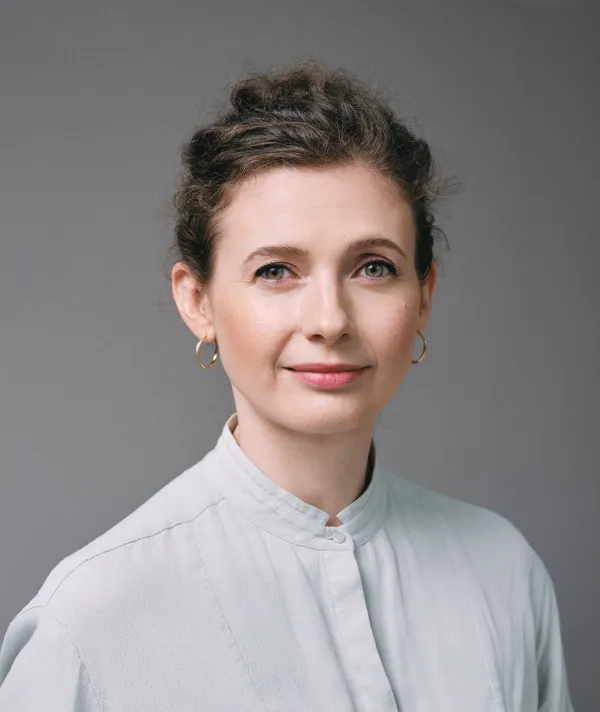
Anna [Anouk] Luhn is a literary scholar with a focus on language and the diverse power structures that surround it. Drawn to formats of multidisciplinary knowledge work at the intersection of academia and the cultural sphere, her research focuses on how imaginaries, environments, and technologies shape our practical and conceptual access to language, and how literary communication—including so-called ‘secondary’ practices of poetic production such as editing, layout, and print—participates in processes that transform the social, political, and cultural realms.
Anouk received her PhD in 2020 from Freie Universität Berlin (DE), where she examined the omnipresence of acrobatic forms and subjects in European modernist and avant-garde literature. As a postdoctoral researcher at the DFG-funded Cluster of Excellence “Temporal Communities: Doing Literature in a Global Perspective,” she worked on experimental concepts of translation and literariness in the digital paradigm and co-conceived the cluster’s hub for collaborative and transdisciplinary formats. She is a co-founding editor of the con·stel·la·tions publication series (Textem Verlag).
What are the implications of a fast-growing reliance on algorithmic text production? How can we investigate the changes brought about by the large-scale implementation of tools powered by Large Language Models (LLM) in virtually all areas of life—and is it possible to intervene in the new language regime they impose?
The project suggests that we can gain insights into the current paradigm shift by revisiting earlier moments when technological innovations challenged and ultimately changed the ways we access and use language—and that literature, in particular, serves as a crucial site for examining how media of linguistic interaction have been encountered, contested, or metabolized in societies at large. As a textual archive, literature records the language politics and doxa of specific times and communities. As a practice of linguistic attention by default, it also provides the means for critical engagement: inciting activism, calling for disobedience, and dismantling ideologies.
Focused on a forthcoming book manuscript, Anouk’s investigation into multimodal “language crises” in late modernity aims to contribute to urgent discussions about a shared ‘matter of concern’ in our platformed society—one fundamentally conditioned by the power dynamics of language.
large language models; algorithmic text production; language and power; media history; literary studies; digital humanities; platform studies; multimodality; language politics; critical theory; media theory; linguistics; cultural history; ideology critique; text and technology; artificial intelligence; late modernity; literary activism; discourse analysis; sociolinguistics.