
Institute for Advanced Studies in the Humanities
United Kingdom

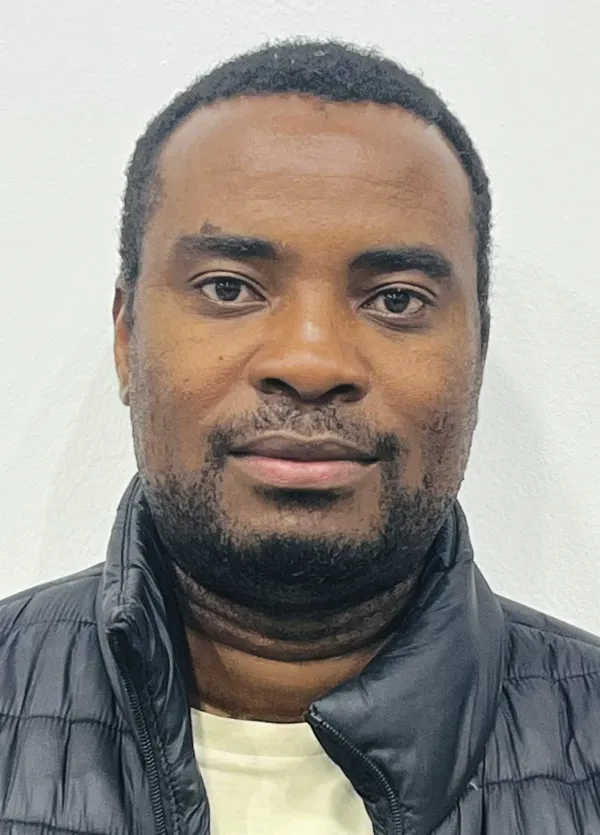
Johannes Machinya is a Lecturer in Health Sociology in the Department of Sociology, School of Social Sciences at the University of the Witwatersrand. His research lies at the intersection of the sociology of health and science and technology studies (STS), with a particular focus on the socioethical implications and governance of emerging health technologies in Africa. His research interests include mobile health applications (mHealth), digital surveillance and datafication, health data privacy and security and the regulation and governance of emerging health technologies.
Consumer-facing mobile health (mHealth) applications are increasingly embedded in everyday practices of self-care and support, and they generate data that can circulate through wider platform and commercial economies. This paper examines dynamics through Care4Men, a South African mHealth app designed to support men’s sexual and reproductive health. It draws on an ethnographically informed qualitative case study combining sustained engagement with Care4Men’s developers, digital ethnography, documentary analysis of the app’s privacy and governance materials and interviews with developers of other mHealth apps. The paper shows how seemingly ordinary acts of participation, including self-assessments, support requests and repeated engagement with particular topics, are captured as digital traces, transformed into structured, computable data and rendered usable for profiling, personalisation and inference. It argues that these processes are shaped by a dataist logic in which more data capture is treated as a route to more comprehensive knowledge and more responsive forms of self-care, even though the underlying data may be partial or uneven. The analysis further develops the concept of resourcification to show that user data do not possess value inherently but become potentially valuable through sociotechnical processes that structure, combine, analyse, circulate and reuse them. Technical infrastructures, contractual mechanisms and commercial objectives therefore shape not only how data are generated, but also how they can move beyond the immediate context of self-care and acquire additional uses and forms of value. Care4Men illustrates how self-care, support, data extraction, circulation and potential value generation can emerge through the same sociotechnical arrangements. The paper argues that digital health governance must move beyond consent at the point of collection to address inference, secondary use, third-party circulation and the commercial reuse of sensitive health-related data. It concludes that responsible mHealth innovation requires greater transparency, stronger data minimisation and clearer boundaries between data necessary for self-care and support and data retained, repurposed or circulated because of potential future value.
health; science and technology studies; digital surveillance; datafication