Institute for Advanced Studies in the Humanities
United Kingdom

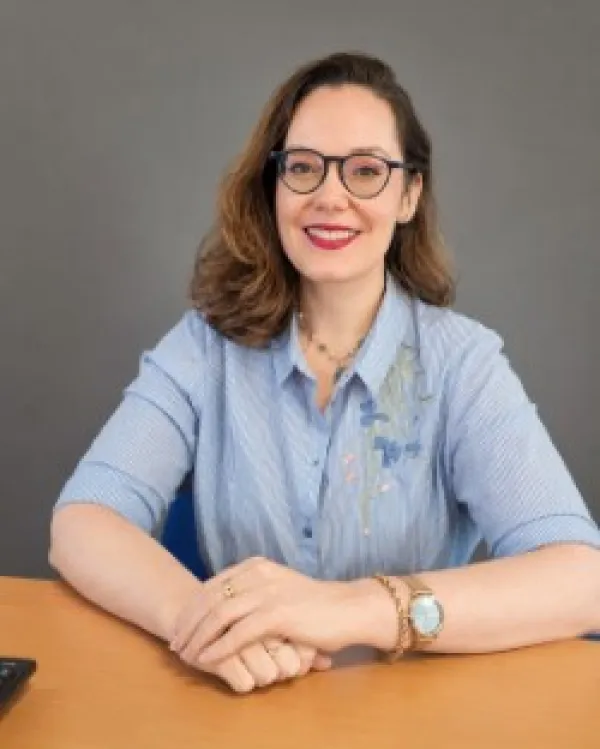
Camilla Machuy is a postdoctoral researcher at the Brazilian Institute of Information in Science and Technology (IBICT), where she studies threats to academic freedom and ways to protect researchers at risk. This work is carried out in partnership with UNESCO's Programme on the Freedom and Safety of Scientists. She also leads a global mapping of organisations that support threatened researchers.
She holds a PhD in Information Science from the Federal University of Rio de Janeiro (2025), including a doctoral research period at the University of Glasgow. Her thesis examined how conspiracy-theory groups on public Telegram channels helped radicalise supporters and mobilise them for offline political action that contributed to Brazil's attempted coup of 8 January 2023. The thesis received the 2026 CAPES Thesis Award in Communication, Information and Museology. CAPES is Brazil's federal agency for graduate education, and its Thesis Award recognises the best doctoral theses defended in the country.
Camilla previously spent nearly a decade as a journalist at Grupo Globo, Latin America's largest media company, where she worked as a reporter, editor and scriptwriter on nearly 200 programmes and documentaries. Documentary film remains part of her research. The pilot of her academic documentary Researchers at Risk, which she scripted and edited, was screened at the Conference on Freedom of Scientific Research, co-organised by the European Commission and UNESCO in Brussels in December 2025, and at UNESCO's Policy Dialogue on Freedom and Safety of Scientists in Paris in June 2026.
In 2026, she held a Coimbra Group Scholarship for a research stay at KU Leuven, where she compared Brazilian and European responses to attacks on researchers.
Researchers are targeted by online harassment and disinformation campaigns that can undermine trust in their work, damage their reputations and expose them to intimidation or physical violence. Generative AI aggravates these attacks by making it easier to fabricate statements, images and videos and falsely attribute them to scholars. However, support for researchers at risk often focuses on those who have had to leave their country, which can overlook academics who stay but are silenced by threats. UNESCO's 2026 Assessment Tool on Freedom of Science and Safety of Scientists recognises digital threats, but it assesses risk at the national level and does not guide decisions about individual cases.
This project therefore asks how organisations that protect researchers identify and respond to online threats against scholars who remain in their home countries. To answer this question, it will review the policies and guidelines these organisations use, interview professionals who support researchers at risk and hold a workshop to develop a practical module for assessing individual cases, designed to complement the UNESCO tool. The project draws on my doctoral research in Brazil, which examined how far-right Telegram groups portrayed experts and universities as enemies, and on the sanctuary practices of the University of Edinburgh. Its aim is to help these organisations respond earlier and more appropriately, before threats make leaving home the only option.
information science; documentary film; academic freedom