
Freiburg Institute for Advanced Studies
Germany

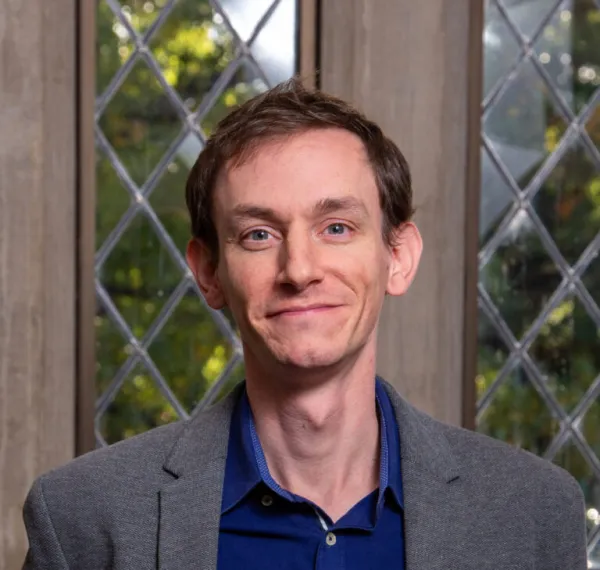
Thomas Manganaro is Associate Professor of English at the University of Richmond (USA) with a Ph.D. in English from Duke University and a B.A. in Philosophy from the University of Chicago. In his research and teaching he specializes in the eighteenth century and Romantic periods with particular emphasis on literature’s relations to philosophy and intellectual history as well as the history and theory of the novel. His first book is entitled Against Better Judgment: Irrational Action and Literary Invention in the Long Eighteenth Century (University of Virginia Press, 2022) and was awarded the Walker Cowen Memorial Prize for outstanding work of scholarship in eighteenth-century studies. As a guest researcher at FRIAS for the 2025-26 academic year he is working on a second book entitled Saying and Showing in the Early Novel. Portions of the project are forthcoming or have been published as articles in the journals English Literary History (ELH) and Eighteenth-Century Fiction.
This project examines ways that prose fiction narratives from the 16th through early 18th centuries convey (“show”) ideas, meanings, and information without directly stating (“saying”) them. The interest in how prose narratives convey notions indirectly or ironically is traditionally associated with Modernist literary values, specifically the “showing” vs. “telling” distinction coined in 1921 to theorize 19th- and 20th-century novels. This book project suggests that our contemporary moment demands a more capacious account of how sentences in fiction show more than what they say. It suggests we look back to a period prior to the congealing of novelistic conventions and accompanying stylistic innovations, focusing instead on prose fictions from around 1550 to 1750 ranging from the Spanish picaresque through the French nouvelle historique to early English realisms. These works reveal modes of indirect presentation that stand out for their natural and inevitable ways of “showing” what they do not say, which arise as byproducts of their epistemological positions as works of writing in vernacular prose. These include “unintentional” ironic effects (to be distinguished from 19th-century intentional irony) and worldbuilding through unsaid implication (rather than through stylized description). Structured along four axes—orality, irony, picture-making, and worldbuilding—the book seeks to provide a more flexible framework for theorizing the novel today.
Seventeenth century, eighteenth century, Romantic-era literature; intellectual history; literature; philosophy; aesthetic theory