Madrid Institute for Advanced Study
Spain

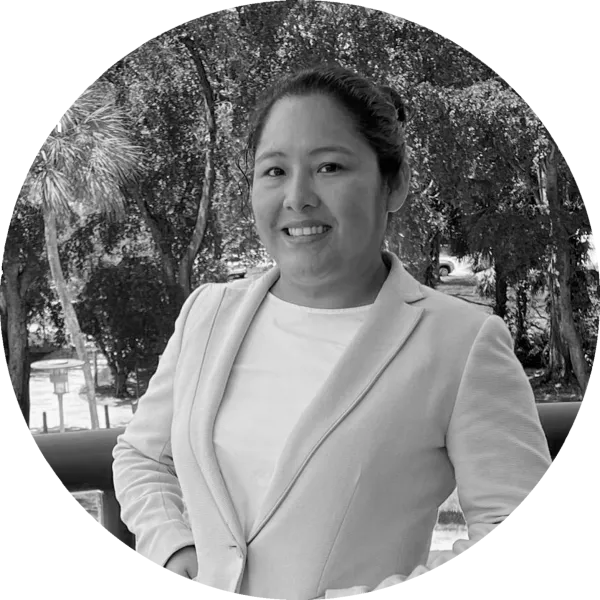
She is a Francois Chevalier fellow at MIAS.
Judith Mansilla is a Teaching Assistant Professor of the Department of History at Florida International University. Her research interests focus on the Andean region under Spanish colonial rule during the seventeenth century. She has published on the role of confraternities in shaping Lim’s urban life, examining how elite and non-elite groups utilized these institutions as social nuclei that provided their members with material and spiritual assistance, while reaffirming their social status and devotion. Her book manuscript, “Foundations of Colonial Rule: Rebuilding the Early Modern State in Lima, Peru After the Earthquake of 1687,” examines the political and material reconstruction of Lima after a significant earthquake hit this colonial center in the late seventeenth century. Her work integrates approaches from environmental, political, social, economic, and legal history to unveil the strategies of Lima’s authorities and subjects in rebuilding their city and maintaining colonial rule in the aftermath of disaster.
Judith Mansilla’s current project, supported by the American Council of Learned Societies and the Consortium of Latin American Studies Programs, examines the mismanagement, fraud, and abuse of power in the seventeenth-century royal treasury of Lima, the principal administrative and financial center of Spanish South America. Focusing on the career of a treasury official who became the subject of multiple investigations, the study reveals how imperial governance functioned on the ground, often through negotiation, circumvention, and corruption. Drawing on detailed archival research from Peru and Spain, the project examines how officials manipulated legal and financial systems for personal gain and how these practices were contested by other actors within the colonial bureaucracy. In addition to analyzing institutional dysfunction, the book also explores broader themes of accountability, imperial control, and the lived experience of colonial rule. By situating local abuses within the larger framework of the Spanish Empire, the project contributes to ongoing debates about the nature of colonial administration and the role of corruption in early modern state formation.
Behavior; Social; Corruption; Perú