Israel Institute for Advanced Studies
Israel

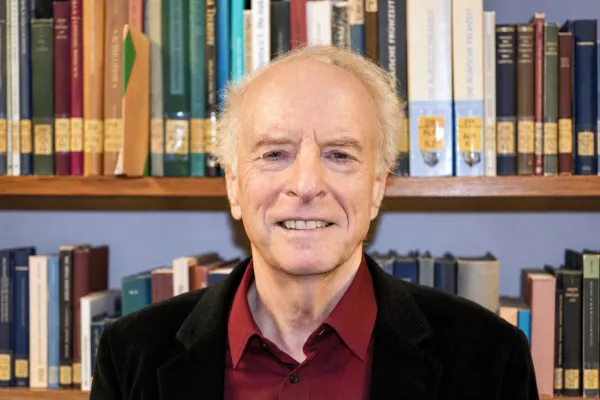
Joseph Maran has served as Senior Professor at Heidelberg University since October 2025. After completing his doctorate in Prehistory and Protohistory at Heidelberg University in 1985 and his habilitation at the University of Bonn in 1994, he was appointed to the Chair of Prehistory and Protohistory at Heidelberg in 1996, a position he held until 2025. Since 1994, Maran has directed, on behalf of the German Archaeological Institute, the excavations at the Mycenaean palatial centre of Tiryns (Greece). From 2013 to 2017, he served as Director of Heidelberg University’s Cluster of Excellence “Asia and Europe in a Global Context.” His research interests focus on the dynamics of transcultural processes, the relationship between architecture and society, and the connections between material culture and social memory in Copper and Bronze Age societies in Europe and the East Mediterranean.
The research project “The Nexus between Social Memory and Transculturality in Bronze Age Greece” focuses on two historically significant periods of the Bronze Age in southern Greece, separated by approximately 1,000 years but both characterised by episodes of rupture, destruction, and human mobility. Taking the Argolid as a regional case study, the project examines the periods ca. 2400–2000 BCE and ca. 1400–1000 BCE to investigate how social, political, and demographic transformations may have shaped the material manifestations of social memory.
While the first half of each period (ca. 2400–2200 BCE and ca. 1400–1200 BCE) was characterised by monumental architecture, administrative practices, and evidence of pronounced social inequality, these features largely disappeared during the second half (ca. 2200–2000 BCE and ca. 1200–1000 BCE), following widespread destruction and what was probably a period of substantial immigration.
The project takes as its starting point the hypothesis that the marked increase in references to the past during the two centuries following ca. 2200 and 1200 BCE, respectively, was driven by social transformations, particularly tensions and conflicts between groups whose ancestors had long inhabited the region and those who had arrived more recently. In the aftermath of the destructions ca. 2200 and 1200 BCE, groups claiming long-standing local ancestry may have sought to legitimise their claims to power by instrumentalising traces of the past, thereby excluding other groups from competing for social and political influence.
In subsequent generations, however, transformations within society may have led to the replacement of these relatively exclusive and divisive references to the past with new, more integrative forms of social memory, with which even groups whose roots in the region were more recent could identify.
Pre-History; East Mediterranean; Protohistory; Balkans