
Freiburg Institute for Advanced Studies
Germany

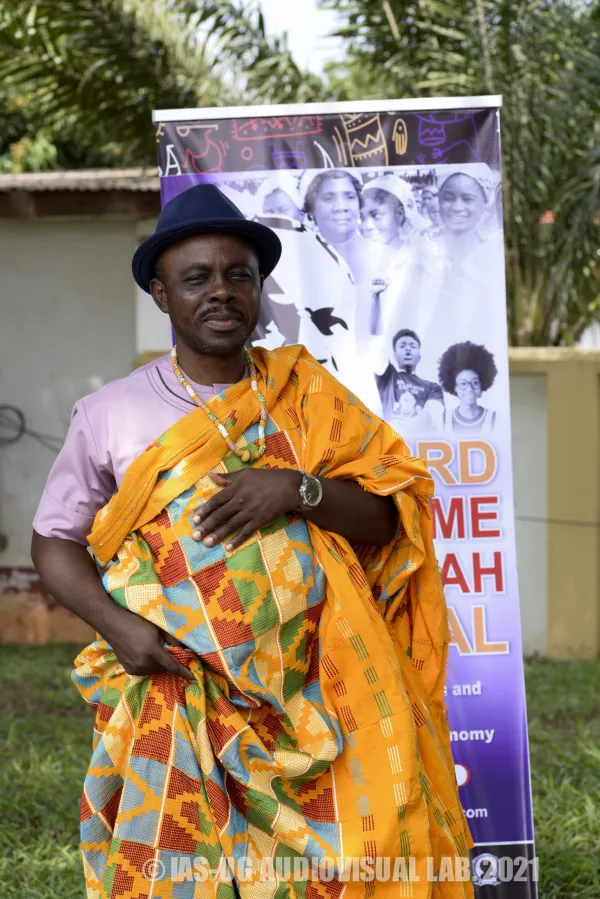
Dr. Mba holds a PhD in philosophy from the University of Ibadan, Nigeria. He is the recipient of various research grants, international research fellowships and sponsorship awards, including the African Humanities Programme by the American Council of Learned Societies; Council for the Development of Social Science Research in Africa (CODESRIA’s) Small Grants Programme for Thesis Writing; the Unit for the Humanities at Rhodes University’s (UHURU) Postdoctoral Fellowship, the 2022 Scholars at Risk Mellon-funded fellowship on academic freedom, awardee of Mellon funding for The Consortium of Humanities Centers and Institutes (CHCI) African Humanities Workshop in Addis Ababa 2019; Co-Principal Investigator of the project ‘Other Universals: Theorizing from Postcolonial Locations on Politics and Aesthetics’, 2019 – 2025; recipient of the Legon-Leiden-Edinburgh 2025 seed grant for the collaborative project: ‘Interrogating Africa’s Inherited Borders and Identities’; Co-investigator in the Andrew Mellon-funded research led by Prof. Mahmood Mamdani on the title ‘Decolonisation, the Disciplines and the University’, 2019 - 2026. He was recently appointed director of the Merian Institute for Advanced Studies in Africa (MIASA Ghana).
This project is a re-reading of the discourse on global justice in contemporary political philosophy, both in the West and in Africa and beyond, through the lens of two of the most iconic African political theorists. This entails reframing key questions, theories, and issues in global justice in light of the works of these iconic figures. This is justified, given that:
African philosophy; decolonial thought; human rights; global justice