
Freiburg Institute for Advanced Studies
Germany

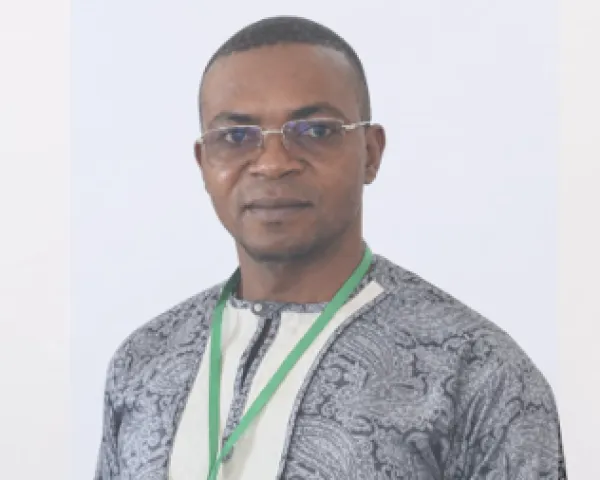
Experienced academic, researcher, and university administrator with extensive expertise in sociolinguistics, language studies, communication, and research methodology. Currently serving as Associate Professor of Sociolinguistics at the University of Bamenda, Cameroon.
Possesses over a decade of experience in higher education, including teaching, research, postgraduate supervision, curriculum development, academic leadership, and scholarly publishing. Has taught numerous undergraduate and postgraduate courses and supervised multiple research projects at bachelor's, master's, and doctoral levels.
Academic qualifications include a PhD in Sociolinguistics, a Master's with Thesis (DEA), an MA in Sociolinguistics, and a BA in English Language, all obtained from the University of Yaoundé I, Cameroon.
Has held several leadership positions within higher education, including departmental coordination, academic administration, and conference organization. Also serves in editorial and scholarly capacities through academic journals and research networks.
Author, editor, and contributor to books, peer-reviewed journal articles, book chapters, and creative works. Active member of professional academic associations and research groups, with participation in international conferences, workshops, and capacity-building initiatives.
Cameroon Pidgincreole (CPc) is one of the most widely spoken languages in Cameroon, yet it lacks a standardized orthography and a comprehensive written corpus. Existing publications employ diverse and often conflicting writing systems, creating inconsistencies that hinder literacy development, academic research, and broader language recognition. This project seeks to address these challenges through a corpus-based approach aimed at developing a reference orthography for CPc and establishing a large-scale written corpus. The study will compile approximately two million words from both published and unpublished sources, including literary works, linguistic studies, media content, advertisements, live programs, church activities, meetings, and spoken interactions. Spoken data will be transcribed using phonemic principles and processed with corpus-linguistic software before manual verification and annotation. The resulting corpus will provide a comprehensive repository for linguistic, literary, and comparative studies on CPc. Through the analysis of orthographic variation within the corpus, the project will identify areas of contention and propose a standardized writing system capable of serving as a reference norm for scholars, writers, educators, and language users. The study also aims to facilitate the acceptance of CPc as a language of education, reduce intelligibility gaps arising from competing orthographies, and promote linguistic inclusion and equality. Furthermore, the corpus will create new opportunities for national and international research while contributing to the preservation and development of CPc. Ultimately, this project will provide the first extensive written corpus of Cameroon Pidgincreole and lay the foundation for its orthographic standardization, thereby strengthening its status as a language of scholarship, communication, and education.
Sociolinguistics; language variation; cameroon english; world englishes; pidgins; creoles; contact languages; multilingualism; language contact; spoken english; pronunciation; language; communication; digital communication; social media discourse; research methodology