
Freiburg Institute for Advanced Studies
Germany

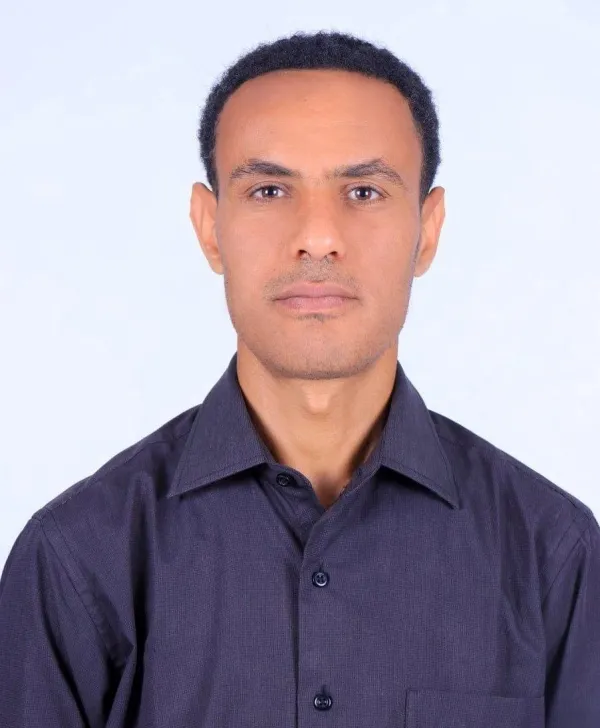
Robel Mulat Asmammaw is an Assistant Professor at Dilla University, Ethiopia and holds a PhD from the University of Gondar. As an urban anthropologist, his research examines the intersection of urbanization, industrialization, and migration. His recent work focuses on the Hawassa Special Economic Zone in Ethiopia, the largest in Africa, critically analyzing how infrastructural development shapes urban ecology through the experiences of migrant workers. His scholarship has been published in journals including Eastern African Studies, Work in the Global Economy, Social Sciences & Humanities Open, and London School of Economics blog. He regularly writes his academic work into public dialogue through blogs and opinion pieces in both English and Amharic. He was a visiting fellow at the African Studies Centre Leiden (ASCL), Netherlands.
This research project examines how historically marginalized artisanal communities in Ethiopia experience changing forms of exclusion during their transtion from rural livelihoods to urban centers and industrial labor regimes. Focusing on smiths, potters and tanners, the study explores how older forms of occupational stigma are reworked through migration, urbanization, and incorporation into industrial employment around Ethiopia’s flagship Hawassa Special Economic Zones. Like other part of the country, artisanal communities in Sidama region occupy an ambivalent social position. Their labor remains economically and culturally important, yet they continue to face social exclusion and symbolic devaluation in everyday life. At the same time, rapid political and economic transformations in the region are altering the ways these hierarchies are expressed and negotiated. Rather than treating marginalization as static or culturally fixed, the project investigates how it is reconfigured within changing urban, industrial, and political contexts. Drawing on ethnographic fieldwork among migrant workers in Hawassa and artisanal households in rural areas, the study analyses how inherited social status, labor precarity, and regional political change intersect in everyday life. Particular attention is given to the emergence of Sidama as a new regional state and the ways processes of state formation, identity politics, and resource competition shape patterns of inclusion and exclusion. The project asks whether new regional institutions and industrial expansion create openings for historically marginalized groups or reproduce inequalities in new forms. The study further examines everyday experiences of factory labor, labor discipline, gendered precarity, and urban insecurity, alongside migrants’ strategies of social navigation, aspiration, and identity management. By linking artisanal marginalization with industrial labor regimes and regional state formation, the project contributes to broader debates on 'caste-like' inequality, migration, labor precarity, and industrial capitalism in contemporary Africa.
Urban anthropology; citizen journalism; ethnography