Iméra - Institute for Advanced Study of Aix Marseille Université
France

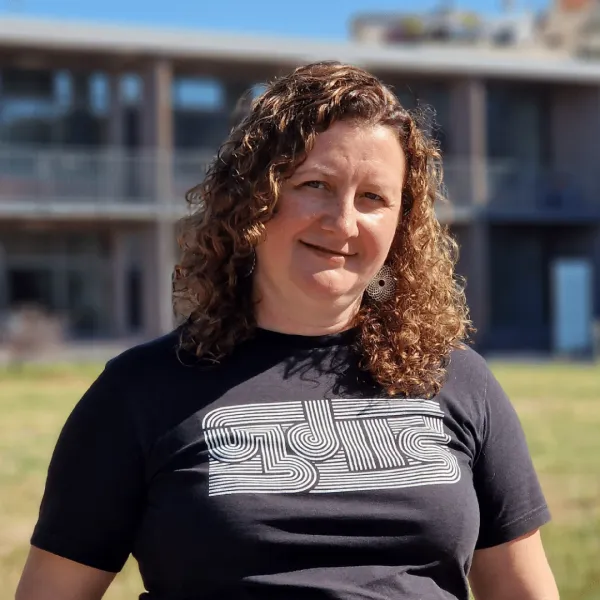
Smoki Musaraj is Associate Professor of Anthropology at Ohio University, USA. She was born and raised in Tirana, Albania. She pursued her undergraduate education at Trent University, Canada and received an MA in Political Science and a PhD in Anthropology from the New School for Social Research, New York, USA. From 2012 to 2014, she served as a Postdoctoral Scholar at the Institute of Money, Technology, and Financial Inclusion at the University of California, Irvine.
Dr. Musaraj’s expertise focuses on economic and legal anthropology. She has conducted ethnographic research in various parts of Albania over the past fifteen years. Her first book, Tales from Albarado: Ponzi Logics of Accumulation in Postsocialist Albania (Cornell 2020), traces how a dozen of ponzi schemes emerged and spread in Albania, how they were legitimized by state institutions and media representations, and how people from various walks of life invested their savings, remittances, and housing into the schemes. Dr. Musaraj has also researched and published various articles and chapters that examine measurements and representations of corruption in Albania and Southeast Europe more broadly. She has co-edited several edited volumes that span the topics of digital finance and financial inclusion, and neoliberal transformations in the postcommunist space.
Smoki Musaraj is fluent in English and Albanian, and proficient in French, Italian, and Spanish. Currently, Smoki Musaraj resides in Columbus, OH with her husband and daughter.
The Mediterranean region has historically been considered as an analytical unit, defined not only by its geographical boundaries but also by its diverse socio-cultural milieu. However, this conception has gradually lost its influence due to geopolitical changes, raising concerns about essentialist and orientalist approaches to studying the region. In recent years, a growing body of literature has rekindled interest in the Mediterranean as a space marked both by unity and fragmentation, influenced by postcolonial legacies and contemporary hierarchies created by fortress Europe.
Research Questions and Objectives
The project addresses several essential research questions to better understand the transformations of Mediterranean cities:
Smoki Musaraj intends to conduct in-depth ethnographic research in several Mediterranean cities that have experienced significant growth in tourism and migration. The project will begin by examining smaller cities such as Saranda (Albania), and then expand to larger cities like Marseille (France) and Barcelona (Spain). This comparative approach will provide qualitative data on urban transformations, municipal policies, and local perceptions in these diverse contexts.
For the future, the research project will explore how local governments and communities address the challenges posed by tourism and migration. By analyzing official policies and local initiatives, Musaraj aims to identify emerging visions of the Mediterranean city, characterized by a cosmopolitanism rooted in popular aspirations rather than the influence of colonial elites.
Anthropology; Mediterranean; Tourism; Migration; Public Policies