
Collegium Helveticum
Switzerland

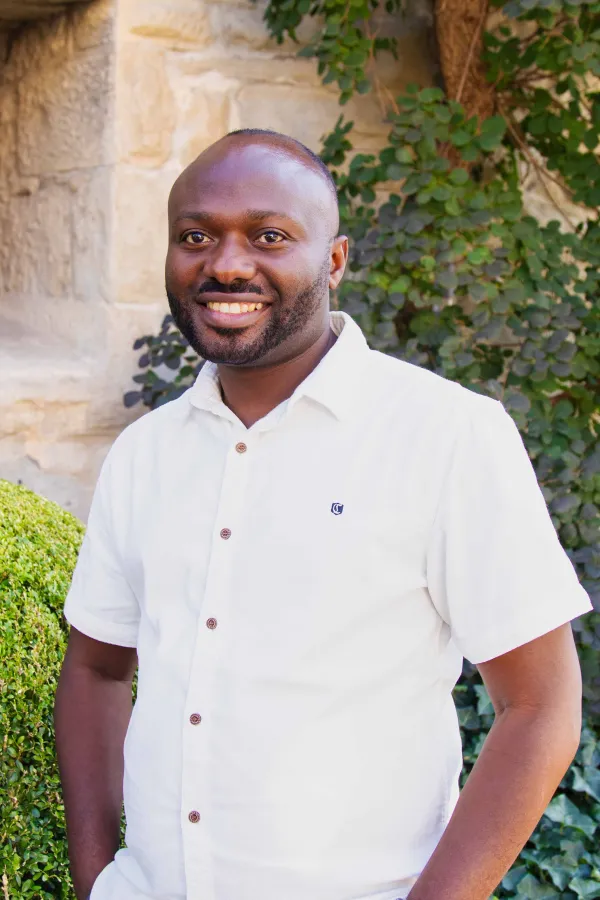
Celestin Mutuyimana is a psychotherapist, filmmaker, trainer, mentor, and researcher with over ten years of experience at both a national and an international level. He decided to become a psychotherapist because he grew up in Rwanda, a country where many people suffer from trauma-related disorders while receiving little to no professional help. Therefore, he founded the Baho Smile Institute (BSI) in 2019, a psychotherapeutic and research center in Rwanda, whose main goal is to help people become aware of their mental disorders and get professional help through the leading objective of the “restoration of Ubuntu in traumatized population.”
Together with film scientists, he also produces short movies with the aim of touching emotions, breaking the silence, and searching for treatment for mental disorders. He is furthermore working with a multidisciplinary team of cultural-clinical psychologists from East Africa, Switzerland, China, and Georgia to explore culturally–specific trauma–related symptoms. Currently, he is an early-career fellow at the Collegium Helveticum and an honorary fellow at the University of Zurich’s Department of Psychology. His research interests include trauma–related disorders and the development of culturally sensitive interventions.
The voice of trauma survivors and the diversity of cultures need to be considered in diagnostic and treatment of mental disorders. However, especially in an African context, this is not really known. Therefore, one can make an argument that despite the efforts of treating trauma-related disorders their prevalence among the African population is still very high. Furthermore, different studies have been conducted that not only indicated the magnitude of trauma-related disorders but also formulated recommendations for policy changes.
However, most of the results of these studies are only available in a scientific format, as articles, papers, and so on. But how can people with low economic and scientific means benefit from the results of these studies? And how can the participants of these studies contribute to policy changes and their implementation? This project aims to bridge these gaps by giving voice to the real experts of trauma: the survivors, from a culture different to the Global North one, to explain their sufferance and propose interventions that they think will be helpful to them.
trauma; diversity; mental disorders