
Collegium Helveticum
Switzerland

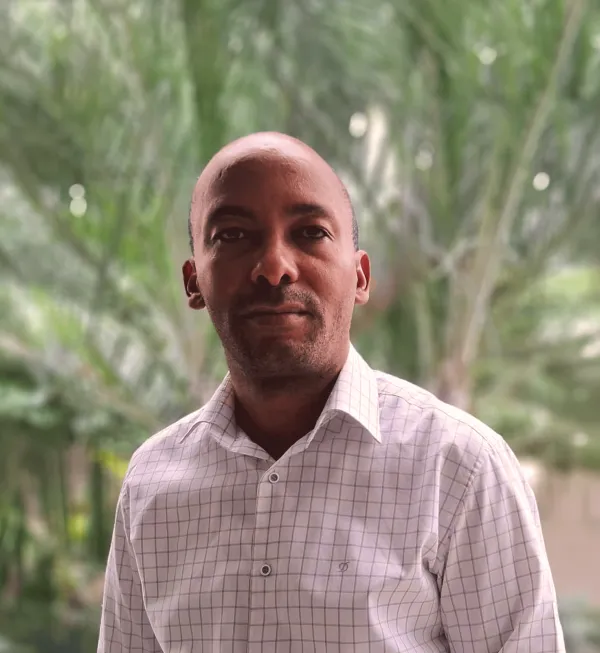
Alex John Ntamatungiro is a research scientist specializing in pathogen genomic surveillance, with a focus on HIV transmission dynamics and drug resistance. His work bridges molecular biology, genomic epidemiology, and implementation science to inform public health interventions in sub-Saharan Africa. He actively supports local capacity building through training and infrastructure development in sequencing and bioinformatics.
Alex holds a PhD from the University of the Witwatersrand (ZA) and an MSc from the London School of Hygiene & Tropical Medicine (UK). His research has been supported by the Wellcome Trust, Grand Challenges Canada, and CARTA, and he has authored over 15 peer-reviewed publications.
Prior to joining the Collegium, he served as a senior researcher at the Ifakara Health Institute (TZ), where he advanced pathogen surveillance and diagnostic research while contributing to the strengthening of national laboratory systems in Tanzania. He is deeply committed to equitable genomic access and fostering transdisciplinary collaboration in infectious disease research.
HIV drug resistance poses an increasing threat in sub-Saharan Africa, where treatment options are limited and routine resistance testing remains rare. In response, this project aims to refine and validate a low-cost, high-throughput next-generation sequencing (NGS) method for HIV drug resistance testing, specifically adapted for implementation in Tanzania.
The overarching goal is to make routine, scalable resistance monitoring a practical reality—improving patient outcomes and reinforcing public health responses. To achieve this, the project brings together expertise from virology, bioinformatics, clinical medicine, public health, and social science in an interdisciplinary approach. A central component of the project is a dedicated workshop that will examine the key barriers to access and uptake of resistance testing. These include cost, infrastructure, training needs, and communication gaps. Insights from this workshop will inform the development of context-sensitive, community-informed strategies to support implementation. By the project's end, a fully validated and cost-effective sequencing workflow will be ready for clinical use. This will be accompanied by a transition plan designed to support adoption in healthcare settings, strengthen local capacity, and align with national HIV care strategies—ultimately helping to close the gap between technological innovation and equitable healthcare delivery.
HIV drug resistance; next-generation sequencing; virology; bioinformatics; public health; clinical medicine; sub-Saharan Africa; Tanzania; global health; healthcare equity; infectious disease; genomics; low-resource settings; capacity building; social science; community engagement; implementation science; healthcare delivery; antiretroviral therapy.