
Netherlands Institute for Advanced Study in the Humanities and Social Sciences
Netherlands

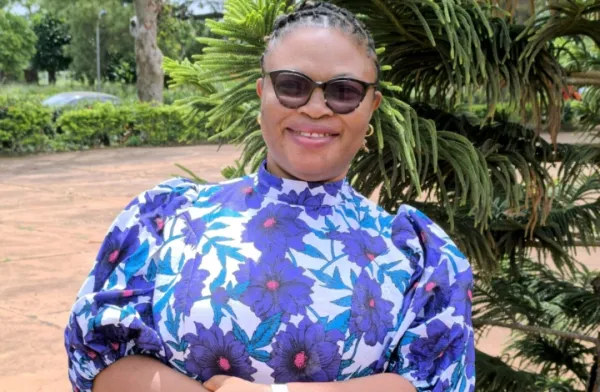
Obi-Ani is an Iso Lomso Fellow at NIAS during 2025-2026.
Ngozika Anthonia Obi-Ani is a Senior Lecturer in the Department of History and International Studies at the University of Nigeria, Nsukka. She is an interdisciplinary historian with a specialization in Nigeria and Africa. Her research focuses on the relationship between women, memory, and conflict, providing invaluable insights into the complexities of African history. Through her examination of women's experiences and contributions, Obi-Ani illuminates their often-overlooked roles in shaping the continent's past. Also, her exploration of memory and conflict studies offers a nuanced understanding of the socio-political dynamics that have shaped contemporary Nigeria.
Obi-Ani's doctoral research heavily relied on in-depth interviews with survivors of Igbo victims of the Nigeria-Biafra War. These interviews have profoundly influenced her postdoctoral research projects, which seeks to comprehend how the post-war unease in Igboland, trauma, memory, and gender issues in conflict are interconnected with a wide array of socio-political challenges in southeast Nigeria. Furthermore, her research aims to explore the younger generation's perception of Nigeria as one indivisible entity, as their grievances stemming from the war continue to fuel current agitations.She is a Fellow of Merian Institute for Advanced Studies in Africa, MIASA, an alumnus of Partnership for African Social & Governance Research, (PASGR) Nairobi, Kenya. She is an African Humanities Program (AHP) fellow, A.G Leventis Fellow, SOAS, University of London, African Peacebuilding Network fellow (Social Science Research Council, SSRC) and Alliance for Historical Dialogue and Accountability (AHDA), University of Columbia, New York, Fellow, Ife Institute of Advanced Studies, IAS, also a 2021 CODERSRIA Gender Institute Laureate and member Conflict West Africa Network, Lagos (CORN), Historical Society of Nigeria, HSN and Lagos Studies Association, LSA .
Currently, Obi-Ani will be collaborating with the Conflict Continuities Collaboration Research Group (CRG) at the African Studies Center, University of Leiden, where she will work on “A Question of Memory? The Biafran Struggle in Perspective. Her research will address how the transmission of memory, in relation to the normalized social disparities in Nigeria, has intensified the call for separation among the younger Igbo generation.
Research question: In what ways do the Igbo people of Nigeria pass down their memories of war to future generations, and how do these generations respond?
Ngozika Anthonia Obi-Ani’s project seeks to explore how successive generations of Biafran war survivors—including those who did not experience the conflict firsthand—have inherited and internalised memories passed down through their families. The Nigerian-Biafran Civil War, which occurred between 1967 and 1970, was fought between the Nigerian state and the Igbo ethnic group. It resulted in a historical trauma that remains deeply embedded in the collective memory and continues to resonate across generations. Obi-Ani examines how the war’s effects have been transmitted, prompting the post-civil war generation of Biafrans to feel a personal connection to their traumatic past.
This project aims to understand how the generations affected by the Nigerian-Biafran Civil War are coping with its legacies, and to interrogate the contestations surrounding post-war generations’ reconstructions of the conflict’s memory. In analysing the legacies of the Nigeria-Biafra war memories on the people of southeast Nigeria, Obi-Ani adopts a decolonial perspective that considers names, music, and art—cultural elements that resisted the state’s enforced amnesia. These names and musical expressions have become sites of memory, challenging hegemonic silences and preserving alternative narratives.
Intergenerational trauma transmission; war memory and collective identity; cultural resistance to state amnesia; postwar memory politics; women; memory; conflict; African history