Helsinki Collegium for Advanced Studies
Finland

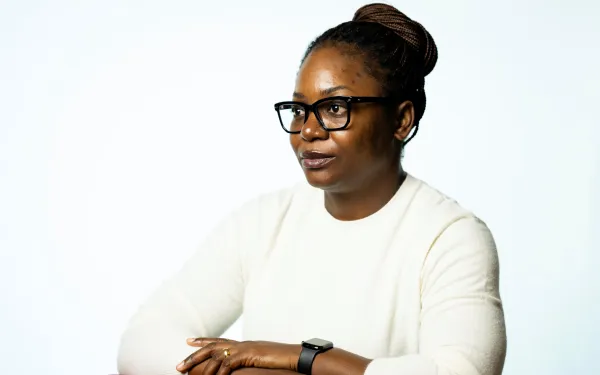
Rachel Ayuk Ojong Diba is a Lecturer in the Department of Linguistics at the University of Buea, Cameroon. She is a sociolinguist and linguistic anthropologist whose research examines multilingualism, language ideologies, language policy, language documentation, and digital language futures in Africa. Drawing on long-term ethnographic fieldwork in Cameroon, she explores how multilingual practices shape identity, social relations, language maintenance, and educational experiences. Before joining HCAS, she was a Postdoctoral Fellow at the University at Buffalo, where she also held an Individual Postdoctoral Fellowship from the Endangered Languages Documentation Programme (ELDP). At HCAS, she investigates how contrasting language ideologies shape multilingual practices and language vitality in Cameroon.
Cameroon is one of the most linguistically diverse countries in Africa, yet its multilingual communities differ remarkably in how they understand and use language. This project compares two multilingual regions, Lower Fungom in the Northwest Grassfields and Bazou in the West Grassfields, to investigate how language ideologies shape multilingual practices and language vitality. In Lower Fungom, multilingualism is a valued and ordinary part of everyday life, with individuals routinely speaking several village languages to build and maintain social relationships. In Bazou, by contrast, language use is shaped by linguistic hierarchies. Smaller local languages are increasingly being replaced by Medumba, the regional lingua franca, while Medumba itself is under growing pressure from French. This layered hierarchy contributes to successive processes of language shift and the decline of smaller languages. Drawing on extensive ethnographic research conducted over more than a decade, the project examines how beliefs about language, identity, and social belonging influence language acquisition, language use, and intergenerational transmission. By comparing these contrasting multilingual ecologies, the project contributes to broader debates on multilingualism, language ideologies, language endangerment, and linguistic diversity, while offering new perspectives on how communities sustain or lose their linguistic heritage.
Sociolinguistics; Linguistic anthropology; Multilingualism; Language ideologies; Language documentation; Language endangerment; African languages; Digital language futures