
Centre for Advanced Study Sofia
Bulgaria

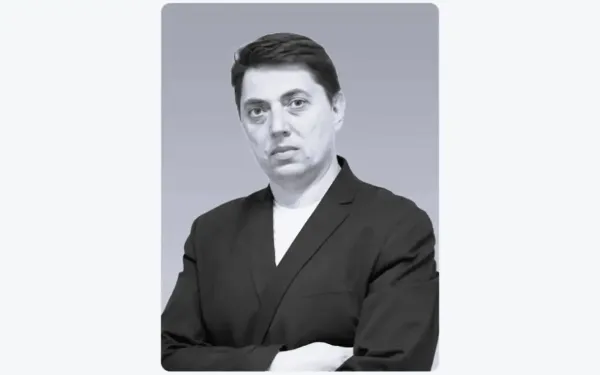
Sergii Pakhomenko holds a PhD in History and is an Associate Professor in the Department of Political Science and International Relations at Mariupol State University (Kyiv), as well as a Senior Researcher at the Faculty of Economics and Social Sciences, University of Latvia (Riga). His research interests include the politics of memory in Ukraine and the Baltic states, the political dimensions of decolonisation, the use of historical narratives in propaganda, strategic communication, and information warfare.
Pakhomenko has been a visiting fellow at Södertörn University’s Ukrainian Fellowship Program at the Centre for Baltic and East European Studies (Stockholm, 2026), the Aleksanteri Institute at the University of Helsinki (2024, 2025), and the University of Tartu (2021).
He is one of the editors and authors of the volume Russian Influence Operations and the War in Ukraine: Studies in Security and Defence (Springer, 2025). He is currently participating in the Fundamental and Applied Research Project funded by the Latvian Council of Science, Re-storying the Victory Square in Riga.
I examine the state policy of decolonisation in Ukraine as a component of contemporary memory politics, which is being shaped in the context of the full-scale Russian-Ukrainian war. In practice, this policy is implemented primarily through toponymy and the symbolic redefinition of public space, focusing on removing Russian imperial and Soviet heritage. My research shows how the decolonisation dimension of historical policy corresponds with the discourse on mnemonic securitisation. Drawing on postcolonial theory, securitisation theory, and discourse analysis, I highlight the complex interplay between security imperatives, ideological motives, and identity politics that shape Ukraine’s current memory landscape. After 2022, Ukraine’s memory politics have taken an anticolonial turn, privileging a Ukrainocentric perspective and reducing the space for mnemonic hybridity. On the one hand, this shift can be understood as a response to the ideological framing of Russian aggression, but on the other, it sometimes generates tension between the securitised national narrative and locally rooted forms of mnemonic ambivalence. The city of Odesa serves as a case study illustrating these dynamics — a site where imperial, Ukrainian, Soviet, and post-Soviet legacies intersect, revealing the difficulties of reconciling national and local frameworks of memory within Ukraine’s current decolonisation agenda.
Memory; Ukraine; Decolonization; Public space; Security