
Netherlands Institute for Advanced Study in the Humanities and Social Sciences
Netherlands


Andrii is a Safe Haven Fellow at NIAS during 2024-2025.
Dr Pastushenko is an Associate Professor in the Department of International Economic Relations and Business Security at Simon Kuznets Kharkiv National University of Economics, Ukraine. Over nearly a decade of teaching in higher education, Dr Pastushenko has delivered a wide range of courses, including specialised courses such as Origins of the Early Modern Global Economy and Europeans and the Sea in the Early Modern Period.
Dr Pastushenko’s research centres on the maritime history of Elizabethan England, with a particular focus on the Catholic identity of Elizabethan seafarers within the context of the long Reformation at sea. His work explores the presence of Catholic sailors on Protestant English ships, on Spanish vessels, and within clandestine Catholic networks of resistance.
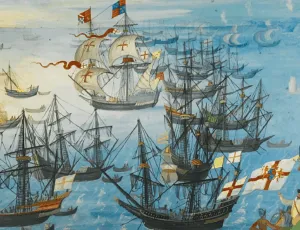
Research question: How were foreign nationals integrated into the culturally, socially, and professionally complex world of Elizabethan seafaring?
Pastushenko’s project examines foreigners, or “strangers”, on Elizabethan ships (1558–1604). In the 16th century, the notion of foreignness was fluid: even the term “foreigner” could refer to someone from another parish, town, or county. Foreign individuals were commonly described as “strangers”; for clarity, he employs “foreigner” in its modern sense.
This project explores their cultural profiles—including national and religious identities—the routes by which they joined crews, and the ways in which they integrated and adapted to shipboard life. Their acceptance often depended on professional skills and perceived social value. While many foreigners came from across Europe, some arrived from Africa and Asia. Although English crews were predominantly recruited nationally, and shipboard communities could be notably xenophobic, multinational crews did occasionally emerge on merchant, pirate–privateer, or exile vessels.
Because “strange” sailors were relatively rare, and national mythology tended to glorify Protestant sea dogs, historians have often overlooked them. This study seeks to redress that neglect, contributing to broader debates on migration, diversity, and multiculturalism.
Elizabethan maritime history; foreigners in early modern England; multicultural seafaring communities; migration and integration; xenophobia and professional acceptance