
Collegium Helveticum
Switzerland

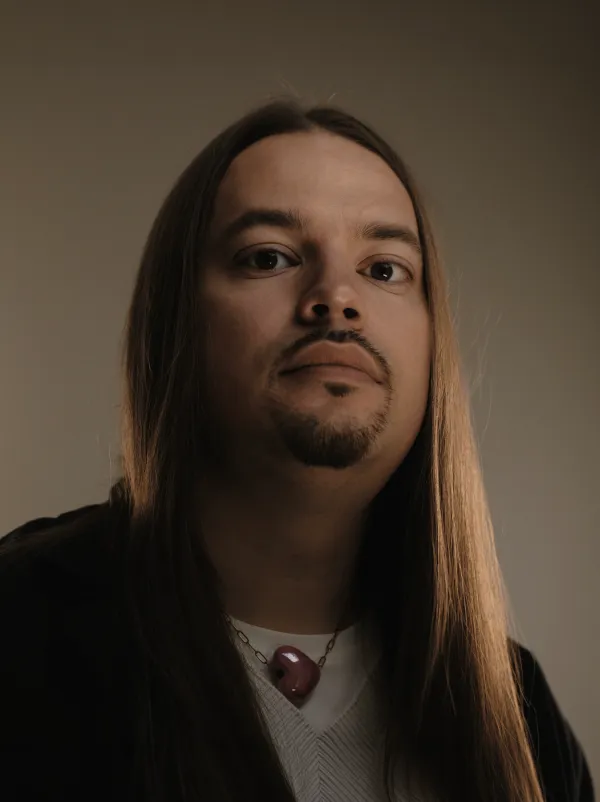
Daniil Posazhennikov (born 1994 in Russia) is a theatre director, composer, and artistic researcher based in Zurich. His work explores theatre as a mode of research, investigating perception, distributed agency, and the possibility of a non-semiotic theatre beyond language and representation. Combining theatre, contemporary music, spatial design, and digital technologies, he develops performative environments that function as experimental systems rather than narrative structures.
Since 2024, together with actress Regina Raimjanova, Daniil has co-led 3rd Echelon Theater, where artistic production serves as a platform for long-term, practice-based research. Before moving to Switzerland, he founded the interdisciplinary company Geometry of Sound, creating more than forty projects spanning theatre, opera, concerts, and exhibition formats. His work has been presented internationally, including at the Biennale di Venezia (IT). He completed an MA in Theatre Directing at the Zurich University of the Arts (ZHdK, CH). At the Collegium, he continues his research into non-semiotic theatre through artistic experimentation and transdisciplinary collaboration.
Theatre has long been understood as a medium of representation, producing meaning through language, narrative, and interpretation. Daniil’s project asks what happens if theatre is approached differently—not as a system of signs, but as a way of investigating perception itself.
The research develops the concept of “non-semiotic theatre:” a practice-based artistic research framework in which performance functions as an experimental environment rather than a representational event. Instead of communicating predefined meanings, it explores how perception emerges through relations between bodies, technologies, spaces, temporal structures, memory, and other forms of human and non-human agency.
Situated at the intersection of theatre, philosophy, media studies, and artistic research, the project investigates performance as a mode of knowledge production rather than a vehicle for representation. More broadly, it asks how theatre might evolve as a transdisciplinary research practice capable of generating new concepts, methods, and ways of understanding experience beyond language.
theatre; non-semiotic; experimental environment; performance