
Netherlands Institute for Advanced Study in the Humanities and Social Sciences
Netherlands

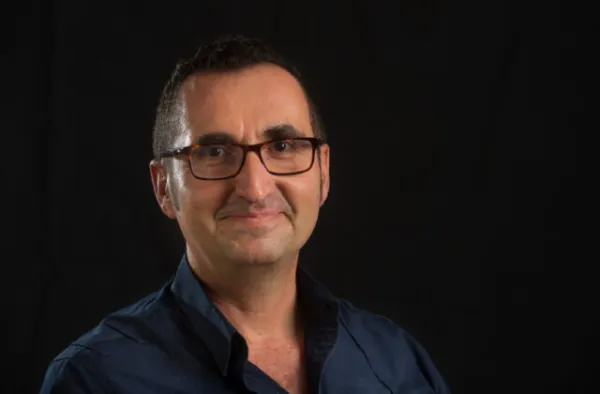
I am ICREA research professor affiliated with the Department of Translation and Language Sciences at the Universitat Pompeu Fabra since 2009. I was Professor of Romance Linguistics at the University of Amsterdam during the years 2007 and 2008. Before that I had already been ICREA Research Professor from 2002 to 2007, based then at the Department of General Linguistics, University of Barcelona. During this period I initiated a new line of research in theoretical linguistics of sign languages. In collaboration with the Deaf Federation of Catalonia, I led the research group GRIN, which published the first description of the basic grammar of Catalan Sign Language (2005).
PhD in Linguistics in 1998 at Utrecht University (Netherlands). Master of Grammatical Theory at UAB in 1993. Degree in Classics (Greek) at the University of Barcelona (1988). I was a postdoctoral researcher at Utrecht University (1998) and UAB (1998-2000) and Assistant Professor in the Department of Romance Linguistics at the University of Amsterdam (2000-2001).
Besides the book Mood at the interface (1998), I have published several articles in international journals such as Language, Cognition, Lingua and Probus, and chapters in collective works such as the Gramàtica del català contemporani (dir. J. Solà, 2002) Semàntica (ed. M.T. Espinal, 2002), The Blackwell Companion to Syntax (eds. Everaert et al., 2005) or Sign Languages (ed. D. Brentari 2010). I have (co)edited several volumes and I am co-editor of the journal Sign Language and Linguistics. I am also vicepresident of Sign Language Linguistics Society and corresponding member of the Institut d’Estudis Catalans (Catalan Academy of Sciences and Humanities), as well as Chair of the COST Action IS 1006 on reference grammars of European sign languages since 2011.
A majority of deaf children are born into hearing families, resulting in delayed exposure to sign language and partial exposure to spoken language. This delay in language acquisition has been understudied, primarily due to the lack of specific language tests for sign language users.
Josep Quer aims to address important gaps in our knowledge of language development in hearing-impaired individuals and provide valuable insights for language therapy and intervention. He examines two phenomena as markers of delayed development in both hearing and hearing-impaired populations: the linguistic expression of counterfactual thoughts and the ascription of beliefs with the interaction of verbal mood.
This project is connected to the ATLAS-Think Language first initiative, born as a Lorentz-NIAS Theme group, which seeks to understand language development during the school years (ages 6-16) in different populations.
Sign language acquisition; delayed language development; counterfactual reasoning in language; hearing-impaired language development