Institute for Advanced Study at Central European University
Hungary

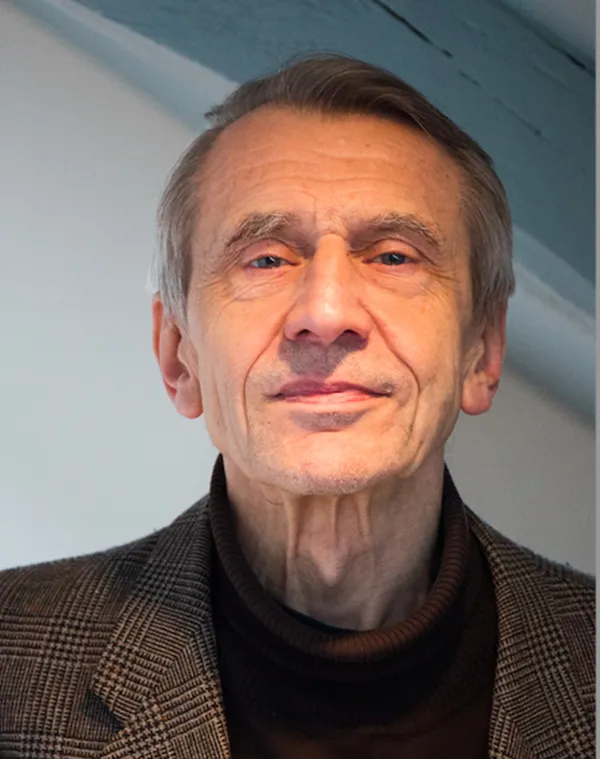
Mykola Riabchuk is a Ukrainian poet, translator, prose writer and essayist, the president of Ukrainian PEN-center and a senior research fellow at the Institute of Political and Nationalities’ Studies of the Academy of Sciences of Ukraine. In 1997, he co-founded (with the Harvard professor George Grabowicz) the Krytyka monthly and managed it as the executive editor till 2000. Since then, he was increasingly engaged in the academic work as both a lecturer and researcher, defended his Ph.D. in political sciences, and published a number of scholarly works – primarily in Ukrainian but also in Polish, English, Russian – three other languages that he is operational. His many books include a collection of poetry Winter in Lviv (1989), two collections of literary criticism – The Need for a Word (1985) and Sisyphus and Rocks (2016), three collections of short stories – Elsewhere, Just Not Here (2002, second edition 2017), Previous Life (2013), and Hundred Anecdotes (2014), two scholarly monographs – Reducing Ambivalence. Dichotomy of the Ukrainian National Identity (2019) and Eastern Europe since 1989: Between the Loosened Authoritarianism and Unconsolidated Democracy (2021, in English), and many collections of essays, in particular – From ‘Little Russia’ to Ukraine (2000, Polish translation 2002, French and Serbian 2003), Dilemmas of the Ukrainian Faustus (2001), Two Ukraines (2003), Zone of Alienation (2004), Die reale und die imaginierte Ukraine (2005), Metternich’s Garden (2008), Mrs. Simpson’s Favorite Gun (2009), Postcolonial Syndrom (2011), Gleichschaltung. Authoritarian Consolidation in Ukraine (2012, in both Ukrainian and English), At the Fence of Metternich’s Garden (2020, in English), Nationalist’s Lexicon (2021).
He was distinguished with the POLCUL award in 1998, Polish-Ukrainian Capitulum award in 2002 (with Jacek Kuron) and the Bene merito medal of the Polish Minister of Foreign Affairs in 2009 for his contribution into Polish-Ukrainian reconciliation. As a Fulbrighter, he taught at Pen State University in 1994-95, University of Texas at Austin in 1996, and carried out research at George Washington University in 2016. He was a visiting professor at Columbia University in 2006 and University of Alberta in 2007-2008, and recurrently, since 2002 till present, at the University of Warsaw.
Since 2014, he heads the jury of the Angelus literary award endowed by the city of Wroclaw for the best book by a Central East European writer published in Poland, and sits on the advisory board on the Ph.D. Scholarships at Die Zeit Stiftung.
The book-length project aims at a study of Russian “imperial knowledge,” understood as a system of narratives developed by the empire with a dual purpose: to enhance and gentrify its own image, while belittling and undermining subjugated nations, depriving them of any agency and rendering them virtually invisible to the world. Its false tenets, normalized in the West as common wisdom, must be thoroughly deconstructed (“decolonized”), as they continue to facilitate the global penetration of Kremlin propaganda and hinder a unified international response to Russian aggression. The research combines a historical analysis of the origins of this “knowledge,” with a sociological study of its role and place in the construction of Russian imperial identity. It also examines the institutional mechanisms of its dissemination and normalization, alongside a critical discourse analysis of the peculiar ways of its political legitimization and instrumentalization.
Russia; imperialism; colonialism; Knowledge production ; narratives; memory politics