Centre for Advanced Study Sofia
Bulgaria

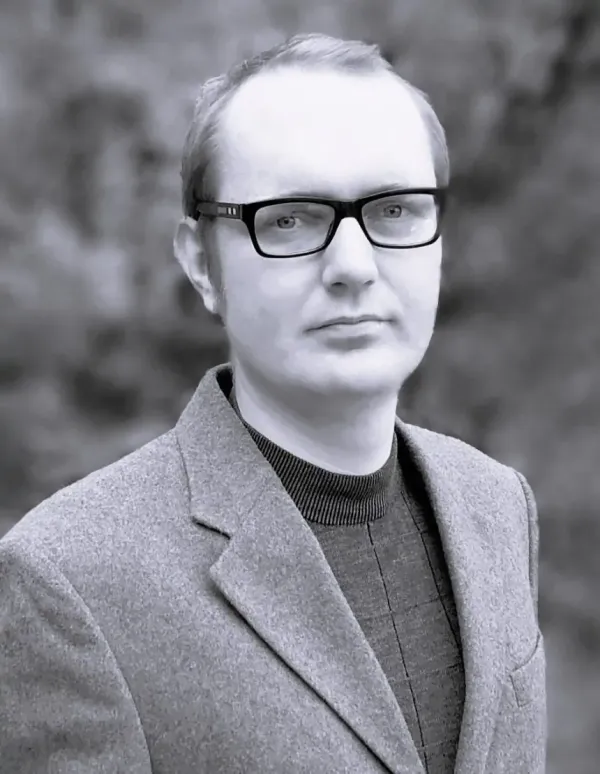
Max Rosochinsky is a scholar, translator, and poet from Simferopol, Crimea. He co-edited Words for War: New Poems from Ukraine, a groundbreaking anthology of contemporary poetry, and co-translated Lyuba Yakimchuk’s Apricots of Donbas, Marianna Kiyanovska’s The Voices of Babyn Yar, and Alex Averbuch’s Furious Harvests. He is a co-recipient of the Scaglione Prize for Literary Translation from the Modern Language Association of America, the Peterson Translated Book Award, and the American Association for Ukrainian Studies Translation Prize. His research has been featured on CBC Radio, The Times, and The Guardian, among other venues, while his translations and editorial work have been highlighted on BBC Radio 3, The New York Times, Paris Review, Washington Post, the 2022 Grammy Award Ceremony, and numerous literary and academic journals. Max earned his PhD in Slavic Languages and Literatures at Northwestern University. His work on twentieth and twenty-first-century Ukrainian literature has been supported by the Fritz Thyssen Foundation, Ukrainian Book Institute, Peterson Literary Fund, Fulbright Scholars Program, National Endowment for the Humanities, and National Endowment for the Arts. In recent years, Max was a research fellow at the Institute for Advanced Study at the Central European University in Budapest, the Institute for Human Sciences (IWM) in Vienna, the Polish Institute for Advanced Studies in Warsaw, and the Akademie Schloss Solitude in Stuttgart.
My book project examines contemporary Ukrainian war poetry in the context of the military and political strategy known as hybrid warfare. It argues that poetry on social media has become an instrument of hybrid warfare as well as a form of resistance to it, forging a sense of individual subjectivity and collective agency and organizing heterogeneous communities through targeted and personalized engagement and dissemination. Throughout the book, I develop an innovative account of poetry as a form of perspective-shifting and emotion-shaping technology able to serve contrary political and ideological goals, thus blurring the line between truth and propaganda. The manuscript will be accompanied by an interactive digital platform, further contextualizing the poems in terms of the new social virtual reality within which they are produced, interpreted, transmitted, and disseminated. Integrating the approaches I developed as a literary scholar with the methods, tools, and techniques from the digital humanities, such as topic modeling, text mining, historical mapping, and network analysis, I examine the transformative effect that the digital presentation has on literary form and content; and map, analyze, and interpret the reception of politically charged poems over time, registering the shifts in the identity-focused narratives expressed and formulated through virtual engagement.
Ukrainian war poetry; hybrid warfare; social media; resistance & propaganda; digital humanities