
Freiburg Institute for Advanced Studies
Germany

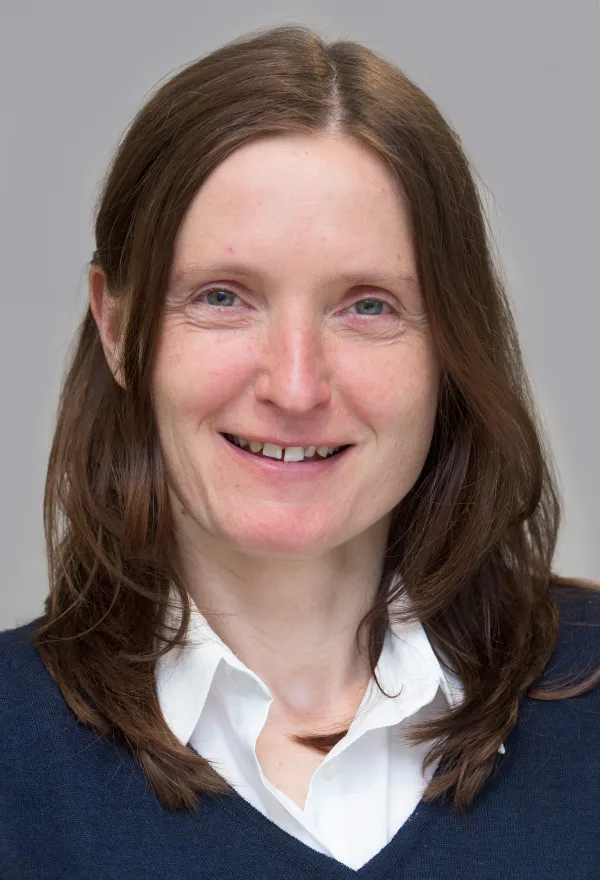
Laura Rupp is Senior Lecturer in English Language and Linguistics and Director of the Centre for Global English at Vrije Universiteit Amsterdam. She holds a PhD in English Linguistics from the University of Essex and has an international research profile in language variation and change, global Englishes, and pronunciation. She has held visiting positions at the University of Toronto, Universität Bern, and Newcastle University. Recent awards include a 2024–2027 Comenius Leadership Fellowship from the Netherlands Initiative for Educational Research, a 2023–2024 British Academy Visiting Fellowship, and a 2022 Swiss National Science Foundation grant.
Her research has two main strands. The first focuses on language variation and change, particularly obsolescent dialect features. In joint work, she developed the Real World Step-Up Model of dialect obsolescence (Tagliamonte and Rupp 2026), a framework for identifying and analysing declining grammatical features in English dialects. She takes part in an international cross-variety project on grammatical obsolescence and co-organised and chaired the Dialect Death and Rebirth workshop at the 8th conference of the International Society for the Linguistics of English (2025). She will also co-edit a forthcoming special issue of English Language and Linguistics on this topic.
The second strand concerns English pronunciation. She developed the free online course English Pronunciation in a Global World to provide for Education for All. The course has attracted over 141,000 participants from 191 countries and generates large-scale, user-driven data for research on pronunciation, language teaching, and language-learning technology
Many grammatical features of traditional English dialects are fading as a result of contemporary changes such as increased mobility. Yet research shows that obsolescing dialect features provide important insights into language change. They follow particular trajectories of obsolescence (Schilling-Estes & Wolfram, 1999), provide evidence of historical linguistic developments (Tagliamonte & Rupp, in press), constitute linguistic heritage, and may be recycled for innovative functions (Van Herk & Childs, 2014; Rupp & Tagliamonte, 2022). They are therefore important sources of information about language change and the cultural identities of communities.
Research to date has largely examined individual features in single or small numbers of communities. We can now address broader questions: When is a grammatical dialect feature truly obsolete? How do obsolescent features differ from rare ones? Do features follow similar trajectories across communities, and can we predict which will disappear or survive? Which linguistic and social factors influence these trajectories? And why may linguistic data indicate obsolescence when speakers report continued use?
Addressing these questions requires a large-scale, cross-variety study using a uniform analytical method across multiple English dialect corpora. An international team will seek AHRC funding for such a project. As preparation, this FRIAS project will develop and pilot a cross-variety method of analysis using the Freiburg Corpus of English Dialects (FRED), held by the Englisches Seminar at the Universität Freiburg. Evaluating and refining the pilot will provide a blueprint for application to other English corpora and underpin the subsequent AHRC funding application.
Language variation