
Iméra - Institute for Advanced Study of Aix Marseille Université
France

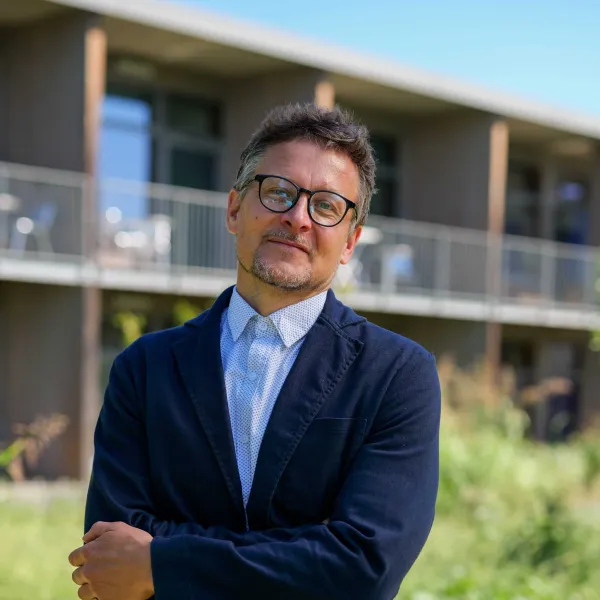
I am a contract lecturer and researcher at the Simón Bolívar Andina University in Quito, Ecuador. My background is interdisciplinary, with two PhDs, one in geosciences and the other in development economics. I study industrial mining processes in the Americas, Africa and Europe. I have worked on the case of Canada as a ‘mining haven’; the ways in which new large-scale mining territories are created in the Andes; the socio-environmental costs of industrial mining activities; and, more recently, the theoretical links between thermodynamics and economics. My approach combines ecological economics, political economy, engineering sciences, action research and the dialogue between the arts and sciences.
Entropo-logy. Entropies, material flows, circularity and sustainability. The case of minerals examines the multiple interpretations of the concept of entropy and its potential to characterise the limits of circularity and sustainability within the context of the energy and digital ‘transitions’. More specifically, the project aims to investigate how entropy can help us better understand the dual challenge posed by the growing flows of materials and energy associated with industrial mining: the potential depletion of ore deposits and the limits of recycling on the one hand; and the harmful consequences of mining waste and pollution on ecosystems and health, on the other.
A transdisciplinary approach to entropy for considering the sustainability and circularity of mining and its complexity
Entropo-logy aims to examine the relevance of multiple interpretations of entropy in describing the flows of matter, energy and information generated by the industrial extraction of minerals; to explain their scarcity and the limitations of recycling; and to account for the socio-environmental impacts of the waste associated with their extraction. Ultimately, the project aims to contribute to the development of an innovative transdisciplinary theoretical framework drawing on the concept of entropy, which both sheds light on these issues and recognises their socially and historically situated nature.
The working hypothesis here is that, despite its ambiguities, the concept of entropy can help us – provided it is approached from an inter/transdisciplinary and critical perspective – to better understand the complex problems associated with anthropogenic material and energy flows. The motivations behind the concept of entropy in the early 19th century were phenomenological and, in a sense, already transdisciplinary (Sadi Carnot was studying the limits of the economic efficiency of thermal engines), but scientific developments in the concept have gradually moved away from the initial approach. Whilst retaining this phenomenological approach, the aim here is to develop coherent representations and categories that can account for flows of matter and energy, as well as information, without falling into reductionism and/or determinism.
Entropy; Mining; Sustainability