
Netherlands Institute for Advanced Study in the Humanities and Social Sciences
Netherlands

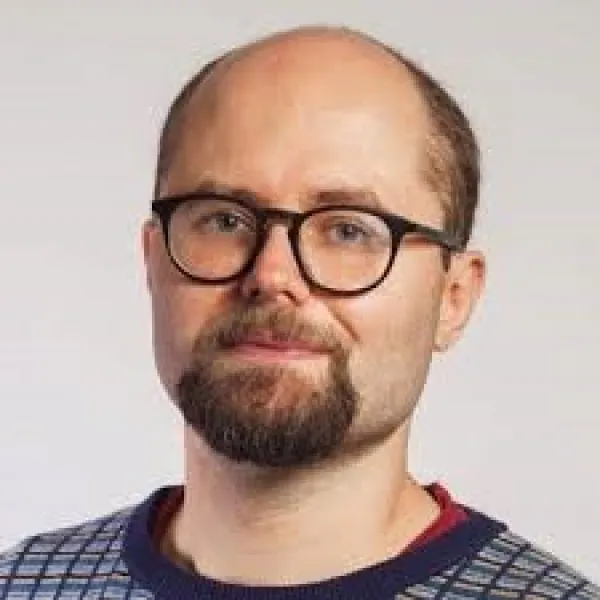
Peter is a Safe Haven Fellow at NIAS during 2022-2023.
I prefer to identify as a field philosopher. What does this mean? It means not assuming that individual concept creation is possible. Joy, labor, imaginative thinking are all the results of a quorum sensing, quorum activity. In some cases, formal institutions allow for this. However, free collective interaction is now difficult to develop everywhere in the world, as daily life shows. That is why I try to avoid firm ties with institutions when philosophizing. I also believe that the academic paper genre is becoming less relevant as a mode of philosophical workings. specifically in the context of a field philosophy. This of course does not mean get rid of texts or other modes of representing philosophy altogether. Just nt necessarily in the form of a 'paper' or high-brow 'expert' comment. People tend not not speak or understand professional jargon of philosophers. And I am interested in people, and other creatures, their lives, their reactions. Interacting with various people and groups allows me to advance in the field of concept co-creation. Sometimes with greater success, sometimes with less success. What makes me happy is knowing that I am not alone in this movement. Throughout my life, I have been a member of numerous communities, as well as the founder of several. Some are no longer alive, while others still exist. Some are yet to be born. I continue to traverse. Those interested in the field where I am currently traveling with my friends, can visit the website https://lepistanuda.com/
How we accept care? How we share care? How are those we who care? How going online changes caring relationships?
Care is not there for us. Instead it emerges out of taking care of something. Taking care often goes without any explicit reference to care. Caring comes with us and by us as long as we are attentive and willing to take our surroundings into consideration. Then the “we” presents the problem. Who are those who care? What is actually needed to involve into caring relationships? It is certainly not a human privilege. Animals do care. Trees or mushrooms may care as well. Yet the means for caring are different. Humans are for now the only species that do care online. I would like to study how going online mediates human ways of caring.
ethics of care; digital mediation; relational ontology; human-technology interaction; more-than-human care practices