
Collegium Helveticum
Switzerland

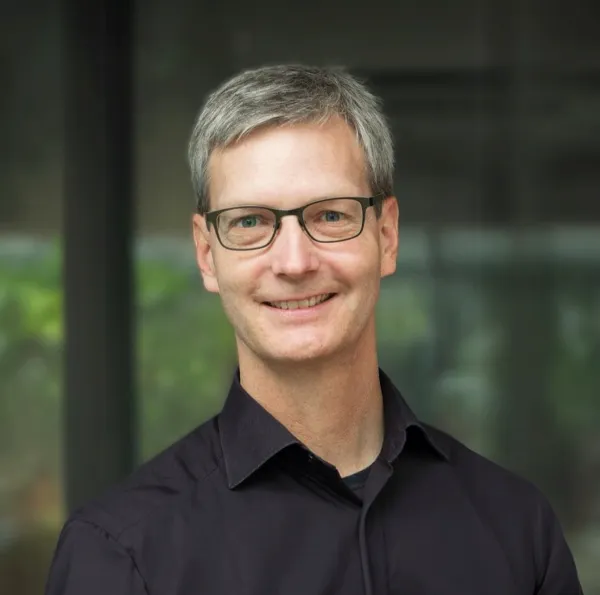
Armin Schäfer is Professor of Comparative Politics at Johannes Gutenberg University Mainz (Germany). His research lies at the intersection of comparative political economy, democratic theory, and empirical social science—examining whether democracy can live up to its promise of political equality and what happens when it does not.
He currently pursues this question through two projects. Together with Claudia Landwehr, he is completing a book for Oxford University Press that develops a citizen-centered, evidence-based theory of democracy. A second project investigates how the growing educational divide in Western democracies shapes political representation and citizens’ sense of voice.
Armin studied political science and economics in Marburg (DE) and Canterbury (UK) and received his doctorate from the University of Bremen (DE) in 2004. After thirteen years at the Max Planck Institute for the Study of Societies and professorships at Osnabrück and Münster (DE), he has been at Mainz since 2022. From 2018 to 2021, he served as president of the German Political Science Association (DVPW).
During his fellowship at the Collegium in Zurich, Armin Schäfer explores the challenges and innovations of modern democracy, focusing on how institutions can better reflect citizens’ voices and bridge social divides.
Schäfer is working on two projects. The first is a book manuscript, Democracy for Real People, co-authored with Claudia Landwehr. The book develops a citizen-centered, evidence-based theory of democracy and examines why democratic institutions often fail to deliver equal voice and effective self-government. Combining normative theory and empirical research, it analyzes citizen attitudes, institutional design, and democratic innovation. Switzerland’s power-sharing system and tradition of direct democracy provide a particularly valuable case, and interactions with experts in law, political science, and the UZH Center for the Study of Democracy are expected to greatly enrich the work.
The second project investigates the impact of the growing educational divide on political representation. As education becomes an increasingly significant social and political cleavage, the gap between citizens’ diverse educational backgrounds and the predominantly university-educated members of parliament may shape perceptions of representation and voting behavior. In Zurich, Schäfer collaborates with the UZH program Equality of Opportunity and with Silja Häusermann and Simon Bornschier on a survey to be conducted in four European countries.
democracy; political representation; citizen participation; institutional design; democratic innovation; direct democracy; political sociology; normative theory; empirical research; educational inequality; social cleavages; voting behaviour.