
Netherlands Institute for Advanced Study in the Humanities and Social Sciences
Netherlands

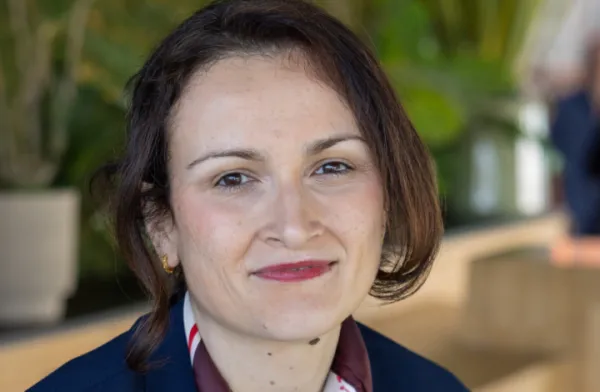
Džemila is a L’Oréal-UNESCO For Women in Science Fellow at NIAS during 2025-2026.
Džemila Šero is an assistant professor and researcher in biometrics and computer vision at the University of Twente. Her research focuses on the intersection of forensics, biometrics, art history, and computer science. She has developed methods using 3D micro-CT imaging to virtually analyze human impressions on terracotta sculptures and other art objects.
Artificial intelligence (AI) is transforming countless scientific fields, yet its role in cultural heritage remains surprisingly underdeveloped. Džemila Šero’s research sits at the intersection of forensic science, biometrics, and art history, exploring something incredibly intimate—fingerprints left on artworks hundreds of years ago. These impressions, often unnoticed, offer a direct, tangible link between an artist and their creation.
Her focus is on terracotta sculptures, particularly those crafted by 17th-century masters like Artus I Quellinus, whose workshop shaped Amsterdam’s Royal Palace. These artists left behind more than just sculptures—they left traces of themselves in the clay. By analyzing these fingerprints, Šero seeks to uncover new insights into artistic processes, workshop collaborations, and even the identities of those who shaped these works.
So far, she has developed a 3D micro-CT imaging protocol to capture and study these delicate impressions. This method has already allowed her to estimate the age and sex of an artist from a single fingerprint and to validate attributions in museum records. However, key challenges remain. Identifying fingerprints manually is slow and tedious, and many are only partially preserved. That’s where AI comes in.
Two main questions drive her research: (1) Can AI automatically detect fingerprints on sculptures, distinguishing them from tool marks? (2) Can deep learning reconstruct partial fingerprints, much like forensic scientists enhance latent prints on paper? By applying biometric methods to terracotta, she aims to push the boundaries of both forensic science and cultural heritage research.
Beyond academia, her work has a profound human element. Finding an artist’s fingerprint on a sculpture collapses time, forging a connection between the maker and the viewer. It’s a silent signature, an echo of the past—one that technology can now help uncover.
AI in cultural heritage; forensic biometrics and art history; 3D imaging of sculptures; workshop attribution studies