
Netherlands Institute for Advanced Study in the Humanities and Social Sciences
Netherlands

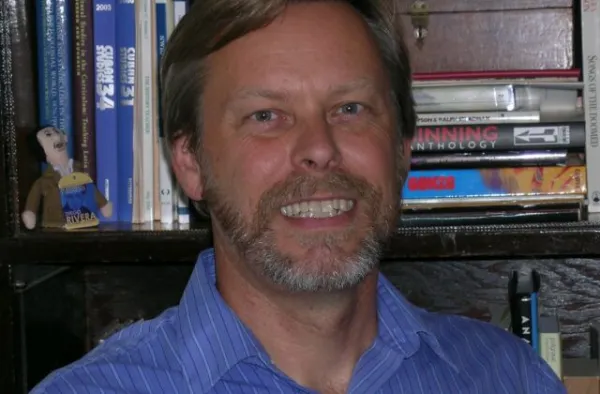
Dr. Kirwin Shaffer is a professor of Latin American studies. He holds a Ph.D. in Latin American History from the University of Kansas and has conducted research across the Caribbean Basin. He teaches courses on Latin American and Caribbean history, Latin American studies, global terrorism, tyranny and freedom, globalization, global cinema, and U.S. history and politics.
Shaffer is a recent Fellow with the Netherlands Institute for Advanced Studies of the Humanities and Social Sciences in Amsterdam. He has been recognized numerous times for his teaching, including being chosen as a Penn State Alumni Association Teaching Fellow. He has taken students to the United Nations and other international agencies in Switzerland, historic sites in Mexico City, and the United Nations in New York.
When not teaching, Shaffer conducts research on transnational anarchism in the Americas. He has published five books on the themes of anarchism and resistance politics in Latin America and the Caribbean. His sixth book on Spanish and Latin American anarchist militants, edited with two scholars in Spain, will be published in 2026. Shaffer is currently writing a seventh book that explores a Latin American anarchist approach to global history titled The World through Anarchist Eyes: Latin American Anarchism and Global History and exploring a project on food and anarchism in Latin American history (tentatively titled Feeding Rebellion, Cooking Up a Revolution: The Cultural Politics of Anarchist Food Workers and Activists in Latin America, 1900 - 1960).
Research question: How did global, national, & local forces interact to shape Latin American anarchists’ portrayals of global events to create an anarchist “world view” for local, regional, & hemispheric consumption?
Kirwin Shaffer is researching the global history of the twentieth century, written through the eyes of anarchists in Latin America. It explores how they described and analyzed global events from the lenses of the Global South and from the bottom-up.
The research is very timely as we see new directions in Global History that challenge traditional top-down, Eurocentric and US perspectives on global history topics. As such, the project is less interested in how anarchists examined events and issues where they lived and operated and more interested in how they described the world as they looked out upon it.
Shaffer’s project illustrates how anarchists across Latin America understood and portrayed key events (the Russian and Mexican Revolutions, feminist and suffrage movements, global labor strife, European/North American/Japanese imperialism and neocolonialism, the Great War, the Spanish Flu pandemic, and the rise of fascism, anti-fascism, and the Spanish Civil War) from anti-state, anti-capitalism, anti-imperialism, and anti-religion perspectives that were shaped both by local and national forces where they lived and operated as well as transnational and global forces via interactions with anarchists across the Americas.
Caribbean history; Latin American anarchism; narrative; knowledge; anarchism; global south; history