Centre for Advanced Study Sofia
Bulgaria

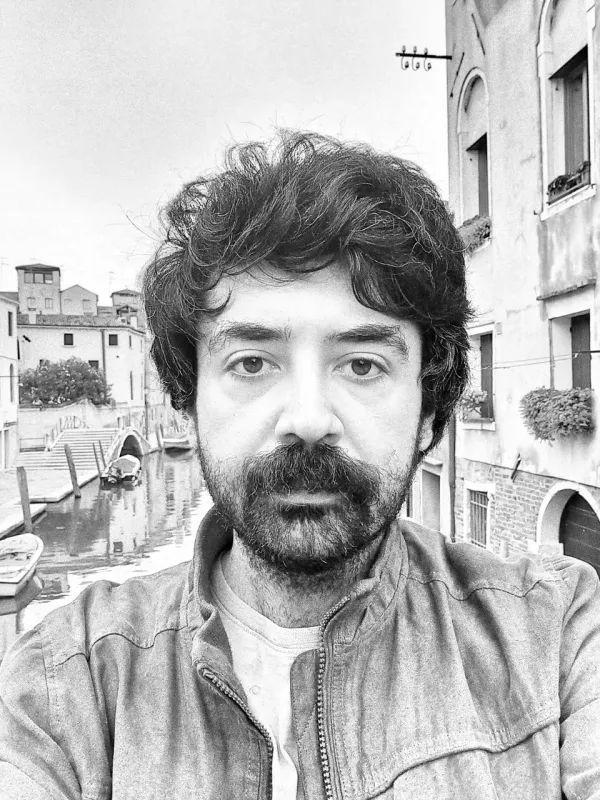
After completing his master’s degree at Central European University, Halit Serkan Simen earned his Ph.D. in the Department of History at the European University Institute in April 2026. His research in the field of sixteenth-century Ottoman history focuses primarily on the Ottoman ruling elite, political configurations, the dynamics of everyday politics, and power relations within the palace and beyond, extending to the wider Mediterranean region. He is currently preparing a book manuscript based on his doctoral dissertation on Grand Vizier Koca Sinan Pasha (d. 1596), as well as conducting studies on Sultan Murad’s dream letters and Mediterranean policies shaped by factionalist divisions within the Ottoman court. In addition to Ottoman history, Simen also conducts research on contemporary Turkey from the 1970s to the 1990s. He has published and is currently working on studies focusing on political mobilization, political violence, sociocultural interactions, political refugees, and memory studies.
Recent publications:
This project examines generational awareness, character, and intergenerational relations within the Ottoman ruling elite from the reign of Sultan Süleyman (r. 1520–1566) to the death of Sultan Murad III (r. 1574–1595). Generational awareness refers, partly following Karl Mannheim, to the ethos, values, reflexes, and formative experiences shared by servants who entered imperial service within the same cohort and who perceived themselves as distinct from preceding or succeeding groups. Although scholarship on sixteenth-century Ottoman political configuration is extensive, the generational dimension of elite life has remained largely neglected. The study explores how generational identities shaped perceptions, political behavior, and patterns of cooperation and rivalry across age cohorts. It examines how individual experience, personal character, and cohort-specific memories informed alignment within the ruling elite and influenced decision-making in moments of crisis and stability. Using Ottoman and European sources such as chronicles, biographical compilations, telhis, mühimme accounts, Habsburg embassy reports, and Venetian correspondence, the project reconstructs how generational belonging shaped elite worldviews and political reflexes. Through selected case studies, it argues that generational awareness constituted a critical yet overlooked factor shaping intra-elite relations, imperial governance, and political culture in the early modern Ottoman world.
Ottoman Empire; Ruling elite; Generations; Sixteenth century; Political culture