
Freiburg Institute for Advanced Studies
Germany

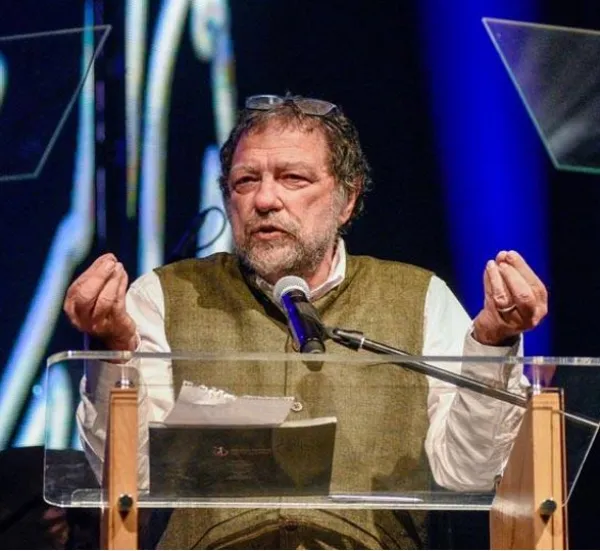
Dr. Ari Sitas served as the Acting Director of the Institute of African Alternatives in Cape Town in 2023 and holds an honorary professorship at the Open Africa Institute at the University of Stellenbosch (2023-2026). He was a member of the Scientific Committee of UNESCO’s World Humanities Report (2022-2024) and a Fellow at CEPED and GRIP at Université Paris Cité (2022-2023). Dr. Sitas was awarded the Order of Mapungubwe (OMS) by the South African Presidency in 2019. He also played a role as a member of the Ministerial Panel for the Future of Science, Technology, and Innovation Framework (HESTILL) in South Africa, co-authoring its 2019-2020 report. Internationally, he has been honored with the Titular Gutenberg Chair at the University of Strasbourg from 2019 to 2023. He was appointed Emeritus Professor at the University of Cape Town in 2019, following his tenure as Professor and Head of the Sociology Department (2009-2018). Dr. Sitas also served as the Director and Principal Investigator of the Multi-Institutional Research Project “Re-Centring AfroAsia” (2016-2021), funded by the A.W. Mellon Foundation. In 2016, Dr. Sitas was named the inaugural Bhagat Singh Chair in Historical Studies at the Jawaharlal Nehru University. He contributed significantly to the BRICS Think Tanks Council (2013-2018) and chaired the South African BRICS Think Tank (2014-2018). His work extended to the National Institute for the Humanities and the Social Sciences (2014-2022) and the National Research Foundation’s Executive Board (2014-2016). Dr. Sitas has served as Convenor for Historical Sociology in the Immanuel Wallerstein Programme on World Polarizations, organized by the Gubelkian Foundation in Lisbon (2009-2013). He also directed the Department of Science and Technology Grand Challenge Research Programme on African Diasporas and Migrations (2012-2014) and chaired the panel that produced the African Union’s Accelerated Industrial Development Programme (2008). At the University of KwaZulu-Natal, Dr. Sitas was Head of the School of Sociology and Social Studies (2005-2007), and prior to that, he served as Dean of Social Science at the University of Natal (1995-1998). He has been a central figure in academic associations, such as the African Sociological Association (2007-2011) and the South African Sociological Association, where he was President from 1996 to 1998. On the international stage, Dr. Sitas served as Vice-President of the International Sociological Association (2002-2006) and held multiple terms on its Executive Committee (1998-2002; 2006-2010). He co-founded the Global Studies Programme in 2002, a collaborative initiative between the University of Freiburg, Jawaharlal Nehru University, and the University of Natal, later expanding to the University of Cape Town in 2010. Dr. Sitas’s also served as Cyprus Coordinator for Research on Reconciliation at the Peace Research Institute in Oslo and the Synphiliosis Committee in Cyprus (2005-2007). He has also been recognized with several prestigious fellowships, including the Senior Fulbright Research Fellowship at the University of California, Berkeley from 1993 to 1994, and another Senior Guest Fellowship from 1999 to 2000. He was a Fellow at Ruskin College, Oxford, and Queen Elizabeth House at Oxford University in 1987. He earned his Doctor of Philosophy from the University of the Witwatersrand in 1984.
There are two aspects of my work that I would like to bring with me for consolidation: the first under the banner of Catastrophic Trends in the contemporary Period involves 12 experts from all parts of the planet exploring ecosystems and pandemic crises, economic disturbances and escalations of arm production and threats of wars. My role in this apart from its coordination, is to complete an extended essay loosely titled The Shredding of the Mandela Dividend. A short version of it has appeared two years ago in the New Agenda Journal. It explores the reasons of how from a period of relative Peace and military expenditure reductions between 1994-2000 we see a rapid reversal of the trend in the midst of serious polarisations. It will be an addendum to my already completed work on the Ethic of Reconciliation which was published with some appreciation in 2008. The second is to begin a thorough research programme in cooperation with Dr Ercument Celik of the Institute of Sociology there and the “Other Universals” project of the Universities of Johannesburg and Cape Town who are looking at the “1911 Universal Races Congress” that took place in London which involved all the major social scientists of the time, representatives from 57 countries and more than 2000 participants. The event enjoyed the presence of luminaries like Toennies and Weber, Du Bois and Durkheim, Boas and Gandhi, Jabavu and Schreiner and many others. Despite efforts to convene a follow-up was disrupted by the First World War. It is an exemplary moment of enunciating a post-racial vision for the social sciences. From our perspective in South Africa, the presence of at least eight major leaders and thinkers of the African, Indian, Coloured and White communities and the need to study their correspondence and diaries and how they interacted with a plethora of thinkers from Europe, the Americas and Asia will be a scholarly breakthrough. This research collaboration will be extended into a creative project on “The Arts of the Universal Races Congress”, that explores musically, poetically and visually profound performances by artists who were searching for a common language in a racialized world, and creates a new work with musical maestros for a contemporary audience.
Social movements