Collegium Helveticum
Switzerland

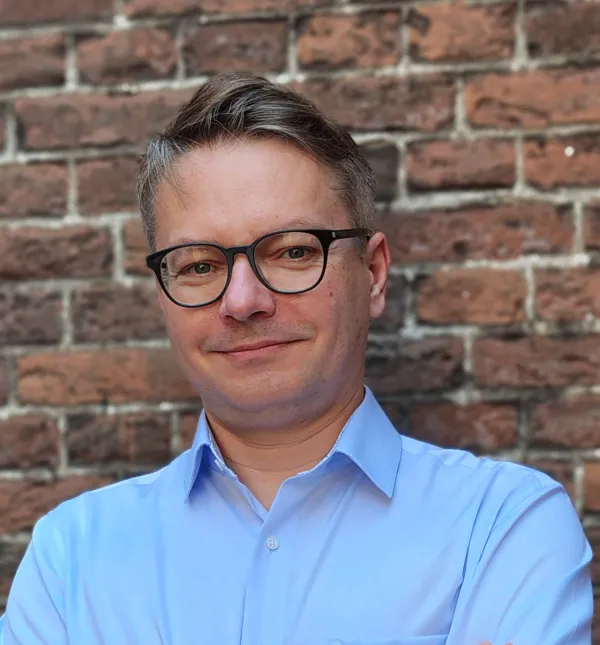
Łukasz Stanek is professor at the A. Alfred Taubman College of Architecture and Urban Planning, University of Michigan, Ann Arbor (US), since 2022. He also holds an additional appointment in the Department of History at the University of Michigan. After studying architecture and philosophy in Kraków, Münster, and Zurich, and earning a PhD at Delft University of Technology (NL) in 2008, Łukasz taught at the Swiss Federal Institute of Technology in Zurich from 2009 to 2011, and at the University of Manchester (UK) from 2012 to 2022. He was a guest professor at Harvard University in 2012 and at the University of Ghana at Legon (GH) in 2022.
Łukasz is the author of Henri Lefebvre on Space: Architecture, Urban Research, and the Production of Theory (University of Minnesota Press, 2011) and Architecture in Global Socialism: Eastern Europe, West Africa, and the Middle East in the Cold War (Princeton University Press, 2020). The latter won the Alice Davis Hitchcock Medallion from the Society of Architectural Historians of Great Britain in 2020, among other prizes. His edited volumes include Team 10 East: Revisionist Architecture in Real Existing Modernism (Museum of Modern Art in Warsaw, 2014) and The Gift: Spaces of Global Socialism and Their Afterlives (Jovis, 2026). He has curated several exhibitions, among them The Gift: Stories of Generosity and Violence in Architecture (Architekturmusem der TUM, 2024). He co-founded Office Southeast, an urban research consultancy based in Accra, Ghana.
This project studies Ghana’s “ways out” of colonial rule by focusing on the transformation of the country's architecture and building industry during the late colonial period and the first two decades of independence (1950s–70s).
This perspective reveals the negotiation, advances, and setbacks of two core promises of Ghana's independence: “Africanization,” the replacement of Europeans by Africans in state administration and the economy, and “development,” or competing visions of social and economic modernization. Conceptually, Łukasz studies how African and foreign actors navigated the temporal contradictions stemming from these promises, such as the clash between fast-track development plans and the long-term needs of training Africans, or tensions between developmental and Indigenous imaginations of the future.
Łukasz argues that Ghana’s opening beyond Britain, notably toward socialist and non-aligned countries in Eurasia, reshaped the agency of Ghanaian administrators and professionals. He shows how they attempted to Africanize architectural labor, education, and the construction and building-materials industries, and how they rethought what it meant to dwell as a Ghanaian. Intertwined with competing developmental visions, the resulting institutions and practices continue to shape urban and rural landscapes across the region.
Ghana; colonial rule; architecture; building industry; independence