
Collegium Helveticum
Switzerland

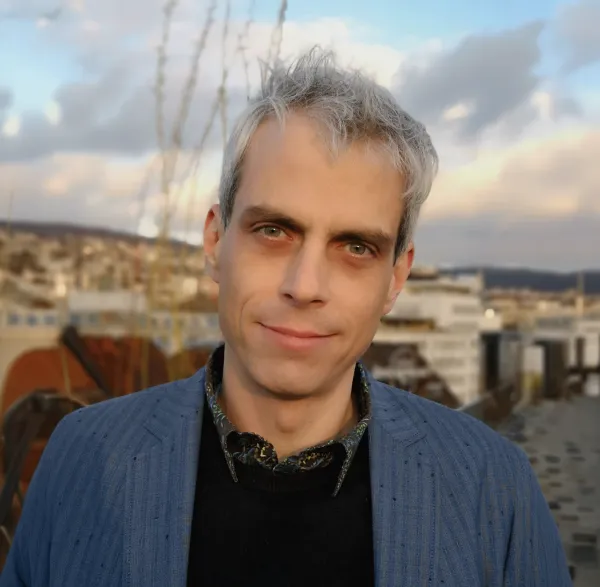
Mischa Suter’s work lies at the intersection of historical anthropology, social history, and critical theory. Trained as a historian of modern Europe, his previous two monographs explore what a cultural history of economic life might look like, and related work has been published in English, German, French, and Chinese. He is currently completing a book on the history of psychoanalysis between West Africa and Western Europe in the 1960s. By retracing experiments with the talking cure in Mali, Côte d’Ivoire, Senegal, France, and Switzerland, he examines the political and epistemological challenges that decolonization posed for understandings of subject formation in both Europe and West Africa.
Mischa received his PhD in 2014 and his Habilitation in 2022. Before joining the Graduate Institute, he taught at the University of Basel (CH) and held visiting scholarships at the City University of New York (US), Humboldt University of Berlin (DE), the University of Vienna (AT), Duke University (US), the University of Chicago (US), and the University of Michigan (US). In fall 2025, he was a fellow at Princeton University’s Davis Center for Historical Studies (US)
This project investigates the history of psychoanalysis to shed new light on the process of decolonization and to open a fresh perspective on psychoanalysis by tracing its development in West Africa.
What is the truth of the human psyche? The project approaches this question from the premise that decolonization was not only a political process but also an epistemological challenge. The end of empire raised fundamental questions about the nature of the human subject. In the period after 1945—when (1) citizenship was renegotiated globally, (2) biological concepts of race were widely delegitimized, and (3) notions of civilizational hierarchy were increasingly undermined—the character of the psyche became a crucial issue: Was it universally the same or culturally specific?
The project examines three psychoanalytic research groups that pursued this question in francophone West Africa, as well as in Paris and Switzerland. By using the talking cure as a transportable technology, these groups articulated a particular understanding of the human subject. This approach was distinctive and became possible only within the transformative conditions of decolonization
history of psychoanalysis; decolonisation; epistemology; West Africa; francophone Africa; postcolonial studies; intellectual history; history of science; race and psychology; human subjectivity; cultural specificity; citizenship; colonial history.