Collegium Helveticum
Switzerland

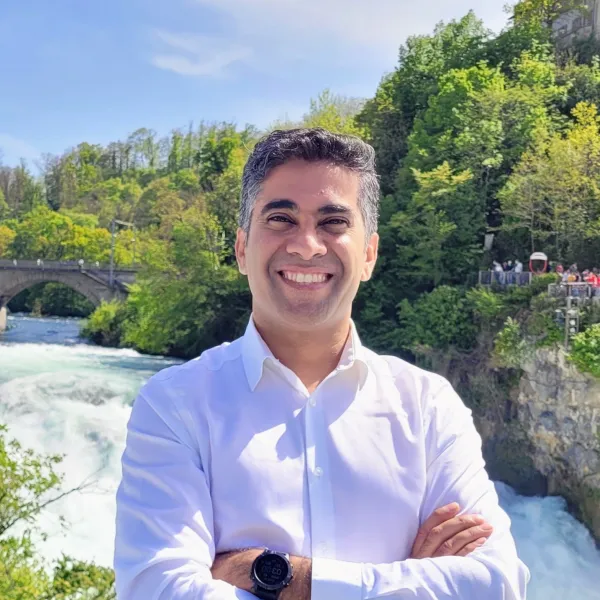
Mahdi Taiebat earned his PhD from the University of California, Davis, USA, and his MSc and BSc from Sharif University of Technology (IR). His research focuses on modeling the mechanical behavior of geomaterials, integrating concepts from geotechnical engineering, mechanics, and computational sciences. His work spans theoretical and computational geomechanics, constitutive modeling of engineering materials, physics and mechanics of granular materials, and geotechnical earthquake engineering, addressing multidisciplinary challenges at the intersection of engineering, physics, and applied mathematics. He serves on the ISSMGE Technical Committees on Numerical Methods (TC103) and Earthquake (TC203), and the ASCE Technical Committee on Earthquake Engineering and Soil Dynamics. Mahdi has served on the Editorial Boards of Soil Dynamics and Earthquake Engineering, Geotechnique Letters, and Soils and Foundations. His contributions have been recognized with the ASCE Norman Medal, the UC Davis Excellence in Geotechnical Engineering Award, and the NSERC Discovery Accelerator Award.
This project focuses on expanding the development and application of advanced constitutive models and numerical modeling techniques to simulate the response of geomaterials and geosystems under cyclic loading, addressing critical challenges in geotechnical earthquake engineering. The work draws on physical modeling, including real laboratory experiments, and insights from virtual numerical experiments such as Discrete Element Modeling (DEM), to improve understanding and simulation of geomaterial behavior at both the element level and the system level of engineered infrastructure. The research investigates key phenomena such as soil liquefaction and the dynamic interactions between soils, foundations, and structures during seismic events. By leveraging both physical and numerical approaches, the work advances predictive capabilities for complex geotechnical systems subjected to cyclic loading. The outcomes contribute to developing safer and more resilient infrastructure, offering solutions for seismic hazard mitigation, renewable energy foundations, and soil–structure interaction systems.
theoretical and computational geomechanics; constitutive modeling of engineering materials; physics and mechanics of granular materials; geotechnical earthquake engineering