Collegium Helveticum
Switzerland

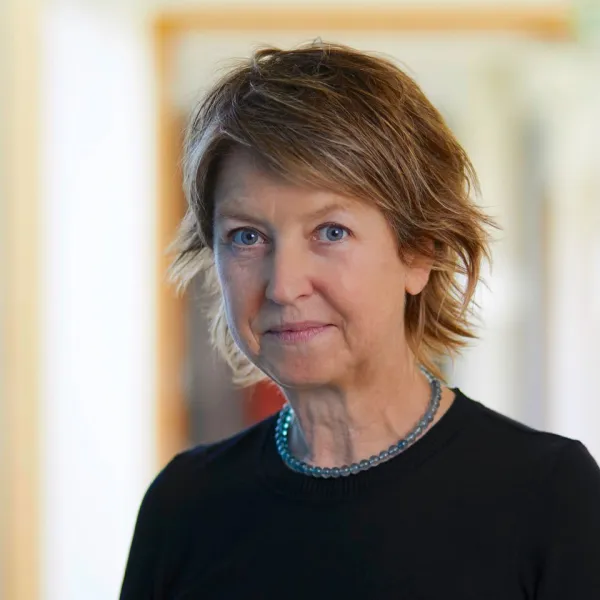
Anke te Heesen is professor in the history of science at the Humboldt University Berlin. She has taught and curated at various locations, for instance, the Hygiene-Museum in Dresden, the Max Planck Institute for the History of Science in Berlin, and the University of Tübingen, Germany. Her research has focused on issues of objects and science, notation systems of scientists, art and science, and collecting/ordering practices.
Her most recent book, published in 2022, deals with a 1960s interview project led by philosopher of science Thomas S. Kuhn enquiring leading quantum physicists of the 1920s and 1930s about their discoveries. By following the ups and downs of the project, Anke te Heesen simultaneously writes a history of the research interview in the 20th century, including early oral history. Her current work turns to the history of the humanities to ask: To what extent can the history and the present of the humanities be reconceived through the concept of applicability?
During her stay at the Collegium Helveticum, Anke te Heesen intends to write an essay that emerges from an iconographic observation: Towards the end of the 19th century, women were portrayed increasingly in front of patterns; women very often appear in a serially structured milieu of various arrayed ornaments. The decor surrounding them and its materiality—the wallpaper, the carpet, and the fabric—form an independent pictorial actor that defines the women depicted and, with them, the particular concept of femininity. These textile or paper patterns surround the person portrayed, and the materials assigned to them ensure that the figure seems to emerge from them or is drawn into them, that she is elevated from or sinks into the background of the picture. In short, the surrounding patterns ensure that the woman is provided with her very own adornment or camouflage. Defined in this way, the motif can be traced from late medieval depictions of the Virgin Mary to the “Reading Woman” in modernity. It takes up discussions of the second half of the 19th century about decorative arts, interiors, and the physiology of perception and remains significant to this day.
femininism; literature