Collegium Helveticum
Switzerland

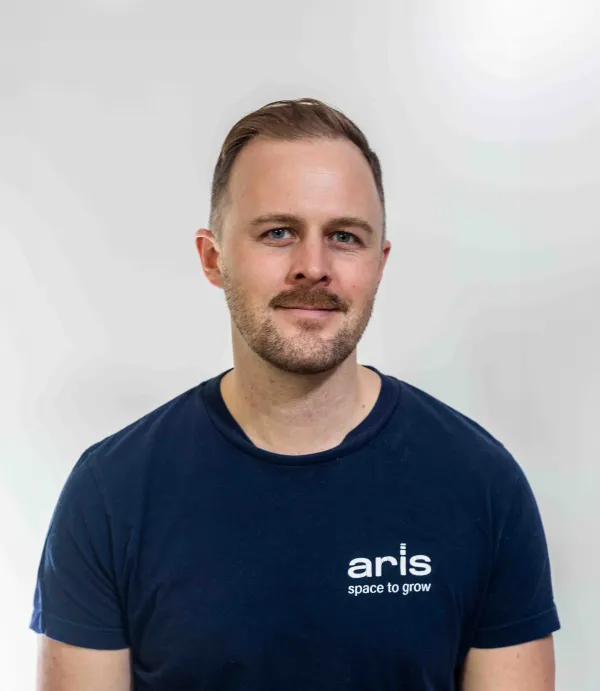
Miles Timpe is an astrobiologist and space sustainability researcher. His work spans both extrasolar and solar system domains. Beyond our solar system, he investigates the origin and evolution of exoplanets and exomoons. Within the solar system, his focus lies on sustainable spaceflight and environmental stewardship beyond Earth, particularly in the context of lunar missions.
Miles earned his PhD from the University of Zurich (CH) in 2020. His doctoral research examined giant impacts during planetary formation, with extensive simulation campaigns conducted at the Swiss National Supercomputing Center (CSCS). As a postdoctoral researcher, he advanced our understanding of the giant impact hypothesis for the Moon's origin.
Before joining the Collegium, Miles was a postdoctoral researcher in the Department of Astrophysics at the University of Zurich. He is a long-time member of the Academic Spaceflight Initiative of Switzerland (ARIS), where he contributed to both the PICCARD rocket and the Swiss Artificial Gravity Experiment (SAGE) satellite
For billions of years, the celestial sphere has acted as a universal clock and reliable map for life on Earth. As a result, many terrestrial species have evolved to regulate critical biological, physiological, and behavioral functions by regular cycles of sunlight, moonlight, and starlight and navigate by recognizable patterns in the day and night skies. At the Collegium, Miles Timpe will explore the environmental and cultural impacts of spaceflight as part of the broader Earth-space system.
Accelerating human activity in space has the potential to significantly disrupt these natural cycles and patterns, with potentially catastrophic consequences for Earth's biosphere and many human cultures. Thus, the rapid commercialization of space and lack of regulatory clarity present an urgent need to better understand the unintended consequences of spaceflight and extend our conception of the Earth system to include a dynamic space environment.
As part of his early-career fellowship, Miles will model planned space missions and assess their environmental and cultural impact within the context of the Earth-space system. The aim of this work is to inspire discussions between the space industry, regulators, policy makers, and the public about how to effectively pursue environmental stewardship beyond Earth.
space environment; Earth system science; light pollution; spaceflight; commercialisation of space; space policy; environmental impact; biodiversity; biological cycles; circadian rhythms; cultural astronomy; navigation; space regulation; planetary stewardship; astrobiology.