
Centre for Advanced Study Sofia
Bulgaria

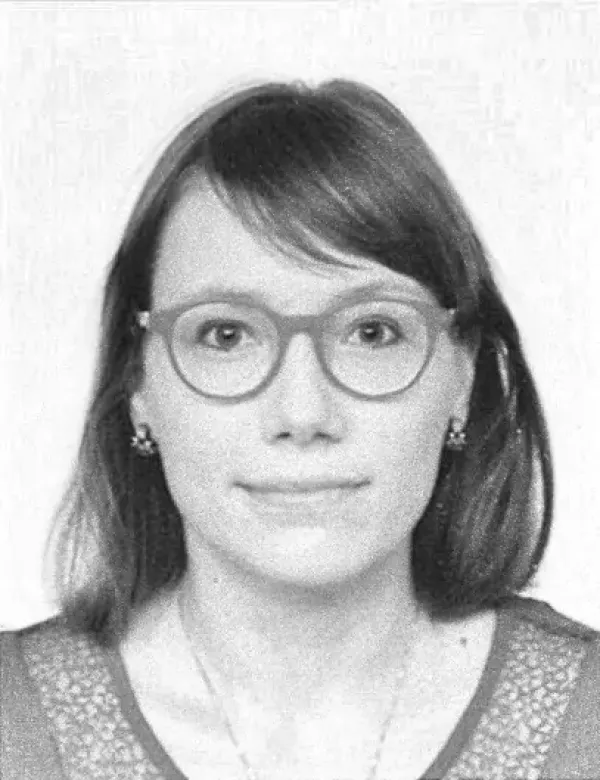
Aleksandra Tobiasz holds a double master’s degree in history and Latin American studies from the University of Lodz, Poland. She was awarded her doctorate by the Department of History and Civilisation at the European University Institute in Florence. She is currently employed at the Institute of Civilisation and Culture in Ljubljana, Slovenia. She participated in the Global Teaching Fellowship Program in Cluj Napoca, Romania and received a postdoctoral fellowship from the Leibniz Institute of European History in Mainz, Germany. She is interested in geopoetics and literary Central Europe with focus on poetics of particular writers and their transregional self-identifications shaped in relation to shifting historical situations and cultural contexts. She is a member of the international Egodocumental Research Group. She has published articles about Witold Gombrowicz, Vladimir Bartol, Stefan Zweig, Václav Havel, Egon Bondy, Ivan Diviš and on concepts of Central Europe.
List of the most recent publications:
The project’s overarching aim is to problematize the concept of (Central) Europe in a transregional, global perspective, in relation to (Latin) America and Russia, Asia through the phenomenological prism of individual experiences of travel and life in exile (self in the mirror of other). The research distances from the widely spread in the scholarship geopolitical approach to East-Central Europe founded on region-building ideas and identity politics. The emphasis is put on geopoetics and literary self-identifications of several Central European writers (Czesław Miłosz, Andrzej Bobkowski, Joseph Roth, Alma Karlin) reshaped in relation to changeable places, cultures and plural temporalities. Drawing on interdisciplinary area of sensory studies the project addresses the writers’ changeable “grammars of identity/alterity” nourished by emotional responses to various instances of Eastern and Western otherness. The geopoetic approach traced in egodocuments re-evaluates the region’s dominant geopolitical conceptualizations structured along the horizontal axis which trapped the Slavic nations in an unfavourable position of in-betweenness forcing on them the complex of inferiority in the face of more civilized West and greater imperial East. The geopoetic transregional horizon sheds a new light on East-Central Europe as an array of sensory topographies stretched from North to South and placed in a global framework.
Central Europe; geopoetics; identity / alterity; exile and travel; sensory studies; transregional perspective