Centre for Research in the Arts, Social Sciences and Humanities
United Kingdom

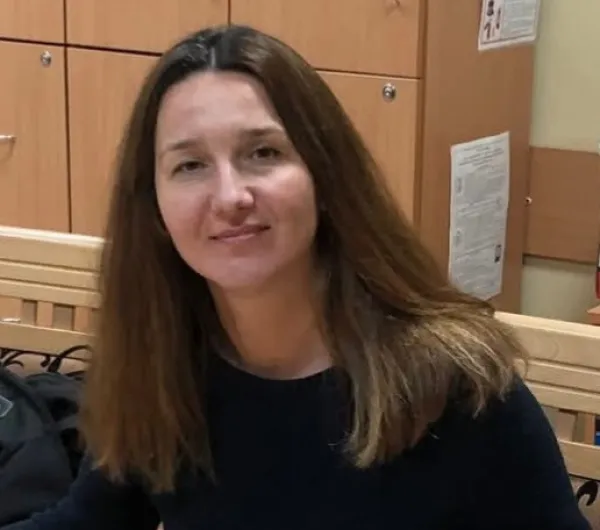
Dr Oksana Tyshchenko-Monastyrska, PhD, is a linguist, she works as a Research Fellow in the Department of Ukrainian Languages at the Potebnia Institute of Linguistics (National Academy of Sciences of Ukraine), as well as Associate Professor in the Department of Turkology, Taras Shevchenko National University of Kyiv. Her research interests focus on the Turkic languages of Ukraine, with particular emphasis on Krymchak, Karaim, and Crimean Tatar and their manuscript culture of 18th century. In modern linguistics her research focuses on aspect studies, namely progressive forms of the Crimean Tatar verb. She has also worked on articulation differences and phonological habits of inherited and acquired speech in order to identify articulation difficulties in Crimean Tatar language learning and develop recommendations for overcoming them.
Krymchaks spoke a local Turkic variety, which could be described as archaic Crimean Tatar and used the Hebrew script as a part of their identity until the early Soviet period. As native people of Crimea, they shared many cultural features with Ottoman Jewry, shaped by many factors, such as religion, trade, lifestyle, common values, closely related languages, and education, which was often obtained in Istanbul. Krymchak manuscripts reveal a unique application of Hebrew letters adapted to a Kipchak-based language later significantly influenced by Oghuz features. I am particularly interested in the Krymchak language, culture, and way of life before 1783, prior to the Russian annexation of Crimea following Russo-Turkish war. This annexation led to migration processes in the 19th century and military campaigns that altered the region’s ethnic landscape, an area that remains insufficiently studied. The research focuses on an unpublished Crimean Hebrew-Turkic document dated to 1776, housing at the Institute of Manuscripts of the Vernadsky National Library of Ukraine in Kyiv. This manuscript includes prayers, Krymchak translations of the Old Testament (Ruth, Song of Solomon), religious poetry, and so-called “sad elegies”. The collection, known as “Minhag Caffa”, consists of 227 pages (21.3 x 16.0 cm). This document, originating from Crimea, was used by the Krymchak community for religious purposes. The project involves transliteration, translation, and linguistic analysis, with particular attention to grammatical features reflected in the manuscript. The Krymchak texts from the Crimean manuscript “Minhag Caffa” provide us a unique corpus of a language variety that is relatively poorly described due to the scarcity of linguistic data. This project aims to shed light on the original written language of the Crimean Turkic Jewish community in the 18th century.
Linguistics; Turkic languages; Crimean Tatar; Krymchak; Karaim; Morphology; Phonetics