Netherlands Institute for Advanced Study in the Humanities and Social Sciences
Netherlands

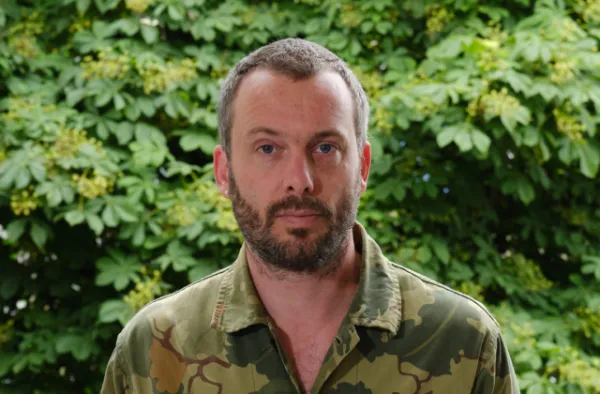
Dirk was a Writer-in-Residence-Fellow at NIAS during 2024-2025.
Dirk Vis (1981) writes fiction, essays, scripts, and poetry, in Dutch and English. Vis spends his working time between the Netherlands and London. His books have been published in Dutch and English: the novel Paren of de kunst van de slaapkamer (Atlas Contact, 2022), the novella Het reality-essay (De Gids, 2017), and the (anti-)manual for artistic research Research for People Who (Think They) Would Rather Create (Onomatopee, 2021). Vis presented animations, chapbooks, performances and websites with his texts and directed several video works based on his scripts. His work has been translated to German and Korean. He is contributing editor of Dutch literary magazine De Gids (The Guide) and co-founder of De Internet Gids. Vis is art theory, research and writing lecturer at the Willem de Kooning Academy in Rotterdam and the Royal Academy of Art in The Hague, besides regularly guest lecturing at various international universities (Norwich University, The University of Chicago, CalArts, Merz Akademie Stuttgart, Leiden University, Universität der Künste Berlin, Vilnius Academy of Arts a.o.).
Research question: Vis writes ‘natural science fiction’, spinning narratives around what remains unknown. The aim is critical not-knowing: exploring the possibilities and limits of speculative writing for art and science.
In “I Tree” (working title), historical, biological and anthropological sources are combined with insights from indigenous worldviews and artistic research.
A psychologist is sent to the last tiny remnant of the Amazonian jungle. It is 2069. Improbable reports are coming from the nearest research stations. The sixth wave of extinction has passed its peak, the world’s oceans and continents have become impoverished and uniform, but at this spot in the jungle a diversity explosion is observed with increasingly exotic insect, animal and plant species never before described.
From the biologists, ecologists and anthropologists studying this forest no usable data comes back. If they themselves return at all, they break off their careers. The psychologist is sent to contact the last scientists remaining.
During forest walks, complicated by the heat, roaming militia, refugees, soldiers, smugglers, rich adventurers and increasingly bizarre plants, insects and animals, she is most troubled by increasingly vivid memories she is sure she cannot have experienced. She feels herself change, as well as her view of the forest, and what she encounters.
narrative; environment; art; science; natural science fiction