Collegium Helveticum
Switzerland

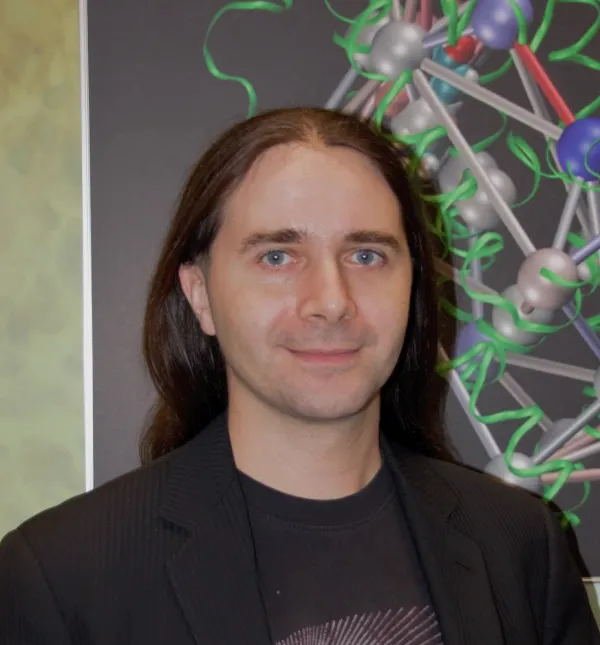
Konstantinos is an associate professor of theoretical and computational chemistry and faculty of the Bredesen Center for Interdisciplinary Research and Graduate Education at the University of Tennessee, Knoxville (US). He develops new computational methods based on quantum chemistry and machine learning for solving problems related to chemical reactivity, catalysis, and separation processes.
Konstantinos is the recipient of the 2021 ACS OpenEye Outstanding Junior Faculty Award, the 2022 NSF CAREER award, the 2023 Bodossaki Distinguished Young Scientist Award in Sciences, and the 2024 Pariser Faculty Award from the American Conference on Theoretical Chemistry.
Quantum chemistry explores how the principles of quantum mechanics can be applied to understand the properties of molecules and atoms. This field plays a crucial role in advancing research related to chemical processes, with implications for important challenges like sustainability, climate change, and clean energy. However, traditional quantum chemical methods face limitations when dealing with larger, more complex molecules. To address this, Konstantinos and his colleagues have developed a family of methods that capitalize on recent progress of machine learning. Their data-driven quantum chemistry methodology allows the accurate and reliable computation of electronic energies and geometries by "learning" complex molecular wave functions, a task that offers transferability across molecules of different size and composition. During his fellowship at the Collegium and as a visiting professor at ETH Zurich, he will focus on expanding the use of these advanced models to study chemical reactions that involve the dissociation and formation of chemical bonds, a critical aspect of processes like catalysis and chemical transformations.
computational methods; quantum chemistry; machine learning; chemical reactivity; catalysis; separation processes