
Netherlands Institute for Advanced Study in the Humanities and Social Sciences
Netherlands

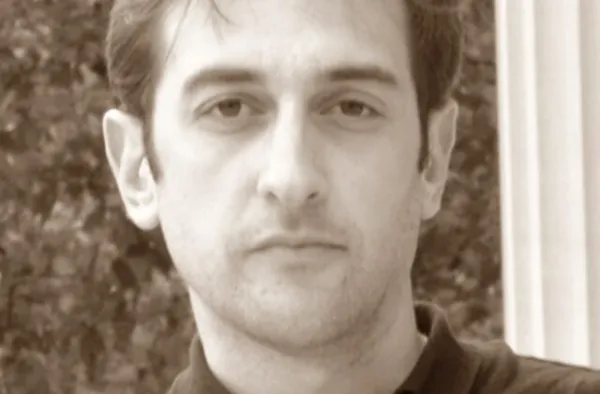
Formerly Associate Professor (Senior Lecturer) at the University of Edinburgh, and Director of the Film Studies Program, I have held two research fellowships-in-residence at the Netherlands Institute for Advanced Study in the Humanities and Social Sciences (NIAS), Amsterdam (2020 and 2023), been Senior Research Fellow at the Cinepoetics Center for Advanced Film Studies at the Free University Berlin (2021) and a British Academy for the Humanities and Social Sciences Postdoctoral Research Fellow.
Currently teaching at the University of Marburg, Germany, and Primary Research Collaborator for ERC (European Research Council) Starting Grant Project, “Cinematic Atmospheres: Towards a New Ecology of the Moving Image – CATNEMI” Steffen Hven, Film University Babelsberg Konrad Wolf, Germany (five-years, 1.5 million euro), 2023-present
Ph.D. in Film Studies (Edinburgh), M.A. in Philosophy (University of York, UK), undergraduate study at Connecticut College and Amherst College.
Main interests include film aesthetics; film and media theory (including cognitive, semiotic, phenomenological, affect-based, and ecotheory approaches); modern and contemporary cinema; intermediality; philosophy of film (analytic and continental); moving image atmospheres and environments; reflexivity; genre hybridity and revision; science fiction; aesthetics and philosophy of art.
Author of Film Worlds: A Philosophical Aesthetics of Cinema (Columbia University Press, 2014), to date reviewed in: The Los Angeles Review of Books; New Review of Film and Television Studies; Critique; The British Journal of Aesthetics; Projections: A Journal of Movies and Mind; Cinemas : Revue d'Études Cinematographiques; Senses of Cinema; Contemporary Aesthetics (publication of interest); Svenska Dagbladet (Swedish daily newspaper); Film-Philosophy (w. response). Shortlisted for the British Association of Film, Television and Screen Studies Best Monograph award.
Currently writing a book on the theory and practice of cinematic reflexivity - Reflexive Cinema: Rethinking Self-Consciousness, Affect and Intermediality in the Moving Image - under contract with Oxford University Press; and co-editing (with Steffen Hven) The Oxford Handbook of Moving Image Atmospheres and Felt Environments, featuring original essays from leading film and media scholars, critics, art theorists and philosophers.
In addition to keynote conference presentations, have given invited talks and seminars at Yale, The British Academy, Free University Berlin, Glasgow (Screen Journal seminar series), Bristol, Leiden, Cologne, Erasmus Rotterdam, Groningen and Ghent, among other universities and institutions. Editorial board member, Brill 'Contemporary Cinema' book series.
How may we best understand reflexivity, self-consciousness, and 'metacinema,' including in relation to cinematic fiction, style, emotion, and affect? Which reflexive and metareferential forms and processes does cinema share with other arts/media, and which are specific to it? What does the operation of cinematic reflexivity reveal about narrative filmmaking and film spectatorship, more generally?
My transdisciplinary research project re-conceives cinematic reflexivity, metacinema, narrative and stylistic self-consciousness, and related processes, from a twenty-first century standpoint. I analyze cognitive-semiotic, intermedial, and notably under explored affective and immersive – including ‘embodied’ – dimensions of reflexivity, understood as a major aspect of cinematic meaning and experience. Arguing against widespread views of reflexivity as inherently anti-immersive, and drawing on general semiotics and aesthetics, as well as film and media theory, the resulting book (under contract with Oxford University Press) also builds significant bridges between the philosophy of film in both continental (e.g., phenomenological, Deleuzian) and analytic-cognitive traditions of thought, which are most often pursued in isolation. During my NIAS fellowship, I will focus on reflexivity in relation to cinematic affect and emotion, embodied cognition, and intermediality, taking advantage of considerable research and dissemination opportunities in Amsterdam and the Netherlands in these areas.
Cinematic reflexivity; embodied spectatorship; film affect and emotion; intermediality; philosophy of cinema