
Collegium Helveticum
Switzerland

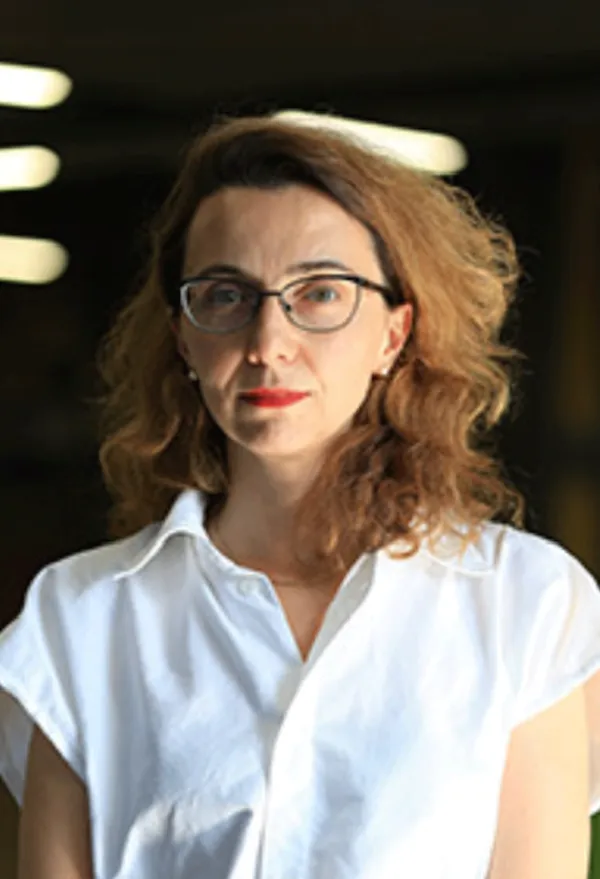
Nino Zhghenti is Professor of Sociology at the Free University of Tbilisi (GE) and a member of the university's Memory and Anxiety Research Lab. She holds an MSc from the University of Oxford (UK) and a PhD from the University of Milan (IT). Her research lies at the intersection of political sociology, cultural sociology, and social psychology, with a focus on political polarization, emotions, and democratic participation in the context of social protests.
Her current work examines how historical experiences, cultural narratives, and shared emotions shape collective identities and relationships between opposing groups, particularly in post-Soviet societies. Drawing on qualitative, experimental, and visual methods, she studies how people interpret political conflict, perceive threats, and sustain solidarity during periods of democratic uncertainty.
Her broader aim is to develop context-sensitive approaches to political polarization that connect cultural interpretation with empirical social research. Her work is motivated by an interest in how societies marked by conflict and rapid political change understand democracy, disagreement, and the possibility of cooperation.
Most theories of political polarization assume that opposing camps are divided by ideology, party loyalty, or clashing values. But what happens when a society is politically divided for other reasons entirely? Nino Zhghenti’s project turns to Georgia to examine polarization rooted not in ideology, but in affect, memory, and loyalty.
Drawing on more than fifteen years of research in Georgia (GE), Nino explores how emotional attachments, personal loyalties, and perceptions of threat shape political identities and relationships between opposing groups. The project challenges approaches developed mainly from Western democracies, where polarization is often explained through ideological conflict, party competition, or value differences. Nino argues that polarization may also take culturally specific forms rooted in collective experiences and emotional bonds. Georgia therefore provides a valuable case for rethinking how political divisions emerge and become enduring.
By bringing political sociology into dialogue with history, social psychology, memory studies, and visual communication, the project develops a broader framework for understanding polarization across different political and cultural settings. During the fellowship, Nino will develop the theoretical foundation and structure of a book on democratic conflict and political polarization in post-Soviet Georgia and beyond.
political polarization; ideology; clashing values