
Constructive Advanced Thinking (CAT)
project
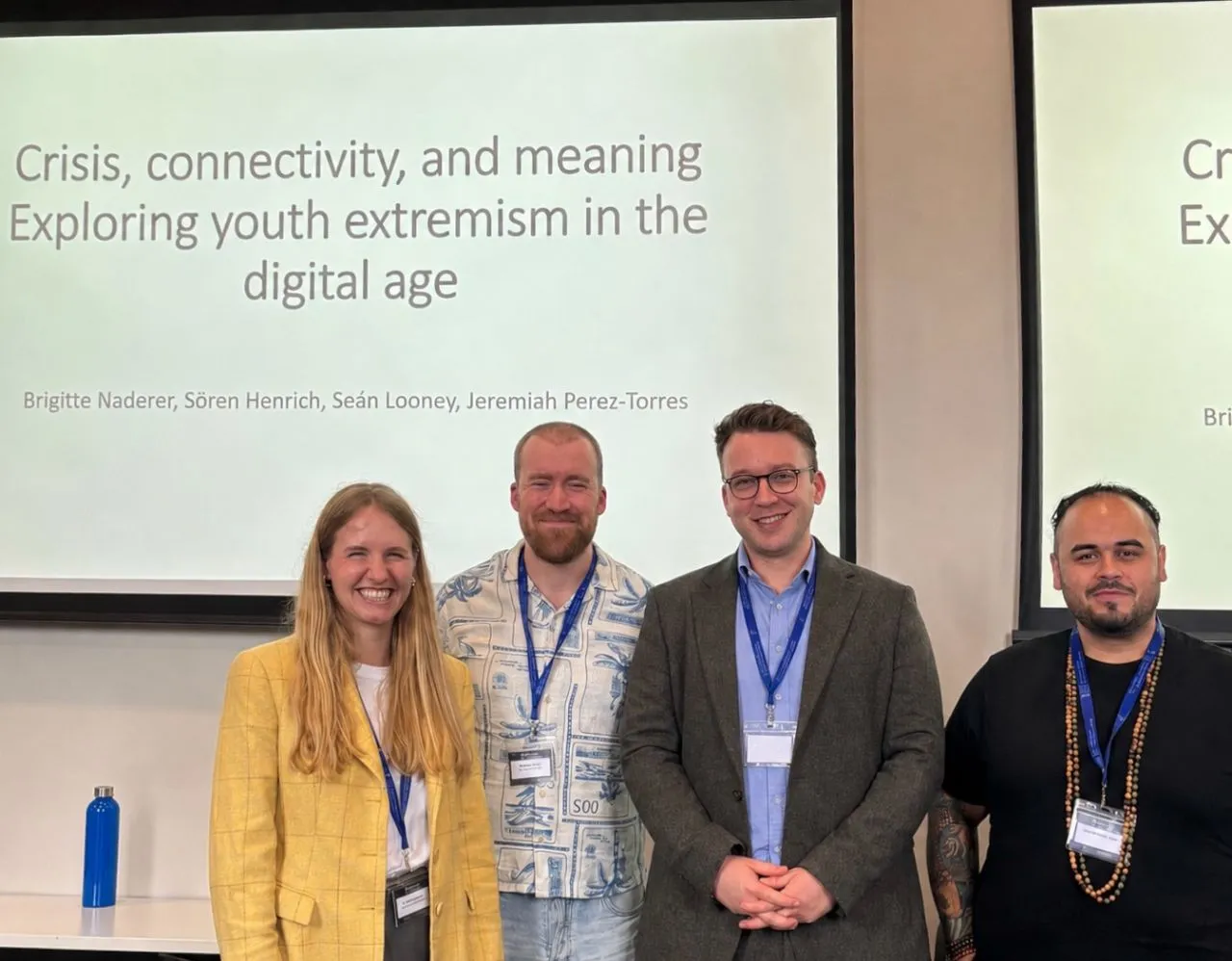
Crisis, Connectivity, and Meaning: Exploring Youth Extremism in the Digital Age

-
Brigitte Naderer (Medic
al University of Vienna, Austria)
Sören Henrich (Man
chester Metropolitan University, United Kingdom)
Seán Looney (University of Plymouth, United Kingdom)
Jeremiah Perez-Torres (Marist University, United States)
Youth extremism has become an increasingly impactful topic within academia, society and politics. The recent trend of nihilistic youth extremist groups has manifested as a spectrum of harmful activity including: terrorism offences, incitement to violence, self harm, cybercrime, violence against women and girls and child sexual abuse. This trend has been complemented by an increasing awareness of the susceptibility of young people to the narratives and communities produced by extremist groups and their reach online. Despite this the area remains relatively understudied and under mapped. Nihilist Groups such as 764, Manic Murder Cult, and the Order of Nine Angles represent a puzzle for extremism research which generally seeks to place extremists within rigid ideological categories. However, engagement with these groups may be due to non-ideological factors such as feelings of disillusionment, dissociation and disenfranchisement from society. The proposed project seeks to bring an international, interdisciplinary approach to this issue in order to build a critical synthesis of each project member's _eld. These subjects include psychology, criminology, criminal justice and communication science. Within these subjects essential exploratory, ethical and mechanical questions remain unanswered. These include questions around data availability and need, the ethics of gathering data on vulnerable people and minors, and how causal research can be designed to answer questions of engagement and disengagement with these extremist groups and cultures.
This project proposes several data collection methods to answer these questions including; the proceedings of a conference workshop with academics, policy makers and stakeholders at a major international conference, and interviews with key stakeholders in criminal justice systems and NGOs operating in this area. This project's overall goal is the formation of a clearer research agenda within this area for future funding opportunities.