Hanse-Wissenschaftskolleg
Germany

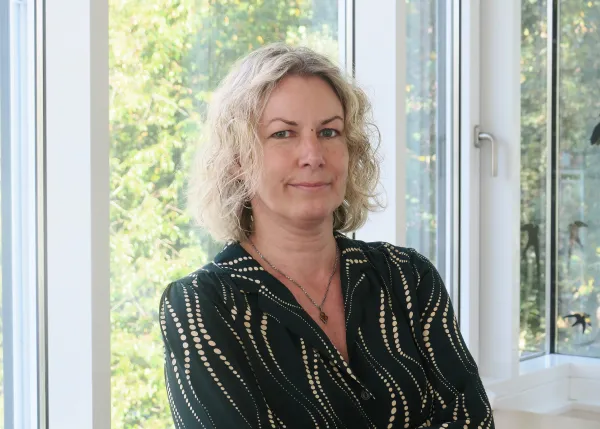
Petra Ahrens holds a PhD in Sociology from Humboldt-Universität zu Berlin, Germany, and the title of Docent in Politics and Gender from Tampere University, Finland. She focuses on gender policies and politics in the European Union and its institutions, gendered party politics, gender-sensitive parliaments and gender mainstreaming, transnational civil society, and gender equality policy and politics in Germany.
She leads the VolkswagenStiftung-funded research project “Gender Equality in German State Parliaments: Gender-sensitive Institutional Reforms in Times of Anti-democratic Backlash” (GeParD; 2027-2031) at the Free University Berlin, Germany.
Previously she held positions as Academy of Finland Research Fellow (2021-2026) and Senior Researcher (2019-2021) at Tampere University, Finland, as Guest Professor for Gender and Diversity at the Free University Berlin (2021), as Marie-Curie-Sklodowska-Fellow and Guest Professor at the University of Antwerp, Belgium (2017-2019), and as Assistant Professor at Humboldt-Universität zu Berlin, Germany (2014-2016).
She has published in journals such as American Political Science Review, Journal of Common Market Studies, Parliamentary Affairs, Party Politics, and West European Politics. Her latest books comprise the Research Handbook on Gender Mainstreaming (2026; co-edited with Serena D’Agostino, Sophie Jacquot, Sonia Palmieri, and Gisela Zaremberg; Edward Elgar) and European Parliament’s Political Groups in Turbulent Times (2022; co-edited with Anna Elomäki and Johanna Kantola; Palgrave Macmillan). In 2018, she was co-founding editor of the European Journal of Politics and Gender. She is associate editor of Social Politics and co-editor of Femina Politica.
Gender equality is key to democracy, but it is not always reflected in the way parliaments work. This project explores how gender equality is fostered or hindered inside parliaments, with a focus on Germany’s national parliament (the Bundestag) and three regional ones (Bremen, Baden-Württemberg, and Thuringia). The German parliament has made only limited progress towards greater gender equality and diversity. Drawing on interviews, documents, and observations, I will look at how everyday rules, practices, and cultures in parliament affect gender equality. My first goal is to complete a book that offers the first in-depth look at how gender-sensitive the Bundestag really is. My second goal is to prepare a new research project comparing how different Bundesländer approach gender equality in their parliaments. By pointing out both barriers and promising practices, I also hope to support reforms that make parliaments better.
Gender equality; parliaments; party politics; European Union