
Hanse-Wissenschaftskolleg
Germany

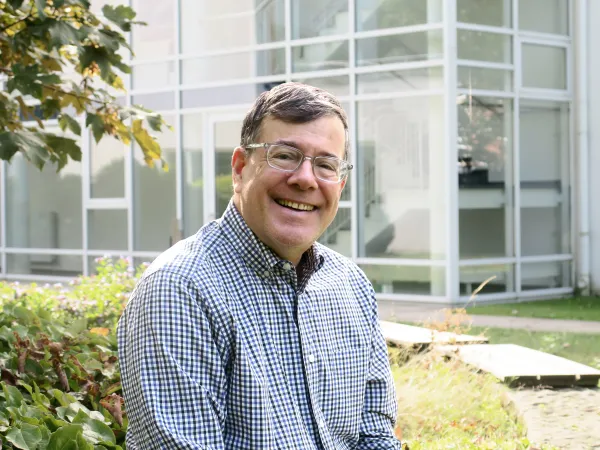
Mark Alpert is a former editor at Scientific American and the internationally bestselling author of eleven novels. His first book, “Final Theory” (Simon & Schuster, 2008), was published in 23 languages, optioned for film, and condensed for Reader’s Digest; his latest novel is “The Doomsday Show” (Severn House, 2022). The first book in his trilogy of Young Adult novels, “The Six” (Sourcebooks, 2015), was a finalist for the Beehive, Nutmeg, and Cybils awards, and in 2021 he won the Best Novel award from the William Faulkner Literary Competition. His short stories and poems have been anthologized and published in literary magazines; one of his stories, “Dodging the Apocalypse,” was published in Anthropocene Magazine and later adapted into a play that was staged in San Francisco in 2023. Alpert studied astrophysics at Princeton University and poetry at Columbia University, where he received an MFA in creating writing.
My work-in-progress novel, Polar Night, is about marine science in the Arctic, based on my explorations of the coastal ecosystems in Svalbard as well as my fellowship at the Marine Biological Laboratory in Woods Hole, Massachusetts. This novel will focus on a high-stakes struggle between two scientists with conflicting goals: a climate geoengineer trying to slow down sea-level rise in the Arctic and a marine microbiologist who discovers a new form of deep-sea life that would be extinguished by the geoengineer’s project.
As carbon emissions and global temperatures climb ever upward, climate scientists are proposing geoengineering projects that could moderate the devastation of global warming. They’re particularly interested in projects that could decelerate the collapse of glaciers in the Arctic and Antarctic regions and prevent a catastrophic rise in sea levels. One such proposal would use undersea curtains to block warmer water from flowing to ocean-fronting glaciers. Polar Night would focus on a multinational consortium that has installed a prototype curtain across the mouth of a glacial fjord in Svalbard. (In real life, researchers have mentioned Svalbard as an ideal place for testing the technology.)
Climate change; Marine science; Geoengineering; Microbiology; Evolution