
Netherlands Institute for Advanced Study in the Humanities and Social Sciences
Netherlands

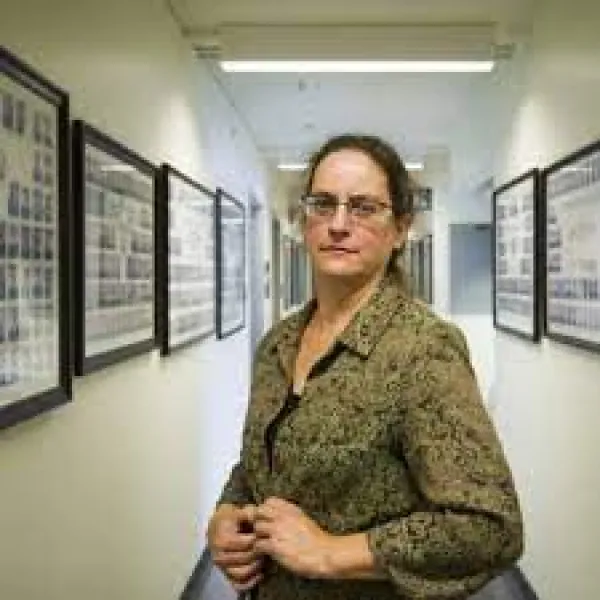
Barbara is a NIAS Theme Group Fellow (Political Theories of Involuntary Servitude within Europe (1600-1850)) during 2022-2023.
Barbara Arneil (Ph.D, London) is interested in the areas of identity politics and the history of political thought. As the author of John Locke and America (OUP, 1996) and many related articles, she has a specialization in the intersection between liberalism and colonialism. She is also interested in gender and political theory, publishing Feminism and Politics, Oxford Blackwell, 1999 (translated into Chinese and published by Oriental Press, 2005). In it she examines how gender shapes the definition and scope of ‘politics’. She has written a critique of social capital from the perspective of diversity and inclusive justice, entitled Diverse Communities: The Problem with Social Capital, Cambridge University Press, 2006 and has published a co-edited anthology entitled Sexual Justice/Cultural Justice, Routledge, 2006. She has done research in the areas of social trust and diversity, global citizenship and cosmopolitanism, the role of disability in political theory and domestic colonies. She has published a co-edited book, with Nancy Hirschmann, entitled Disability and Political Theory with Cambridge University Press, 2016 and Domestic Colonies: The Turn Inward to Colony, Oxford University Press, 2017. Her current research is on the theoretical and ideological distinctions between imperialism versus colonialism and is beginning research towards a book on an ‘organic political theory’, She is also principal investigator on a VPRI research catalyzing grant on the Global History of Anti-Colonial Thought. Barbara Arneil is Past President of the Canadian Political Science Association (2019-2020), Fellow of the Royal Society of Canada (2022) and Member of the Order of Canada (2023).
This research project seeks to identify what the first origins of domestic colonialism were and how the idea of colonies for the poor and/or disabled circulated amongst leading thinkers in England, Scotland, France and the Netherlands at the end of the 18th century and beginning of the 19th century.
Building upon my research in my book, Domestic Colonies (2017) that examined colonies within Europe for the ‘idle poor’ and disabled, this research seeks to identify how the idea of domestic colonies circulated amongst leading thinkers in England, Scotland, France and the Netherlands at the end of the 18th century and first half of the 19th century. The Colonies of Benevolence in the Netherlands and Belgium, recently designated by UNESCO as World Cultural Heritage sites were created by Johannes van den Bosch and are amongst the first colonies in Europe. Through this research project I hope to examine the creation of similar colonies in the UK around the same time and whether there was a circulation of ideas between various correspondents in Britain, France and the Netherlands about such colonies; including the degree to which specific proposals by Sir John Sinclair, the Scottish Founding President of the British Board of Agriculture and Internal Improvement, Arthur Young, Editor of the Annals of Agriculture and the famous English philosopher Jeremy Bentham were known and circulated in continental Europe. Given such colonies in the Netherlands and the UK were seen by their defenders as comprehensive solutions to poverty and provided universal primary education, the degree to which they can be understood as origins of the welfare state in Europe in its most embryonic form will also be examined.
Domestic colonialism; circulation of reform ideas; Colonies of Benevolence; early welfare institutions; poverty management