Netherlands Institute for Advanced Study in the Humanities and Social Sciences
Netherlands


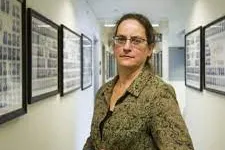
Susanne is a NIAS Theme Group Fellow (Political Theories of Involuntary Servitude within Europe (1600-1850)) during 2022-2023.
I'm a Professor of Philosophy and Women's, Gender, and Sexuality Studies at Boston University. I am also currently the director of the Women's, Gender, and Sexuality Studies Program, an area editor at Ergo, on the editorial board at Hobbes Studies, and a member of the Advisory Board for The Early Career Workshop for Women* in Philosophy.
I received my Ph.D. in Philosophy in 2005 from The University of North Carolina at Chapel Hill. I also received a graduate degree in Women's Studies from Duke University. Before coming to Boston University, I was an Assistant Professor of Philosophy and Women's Studies at Tulane University in New Orleans. My research focuses on early modern political thought. My first book, Hobbes on Resistance: Defying the Leviathan, came out with Cambridge University Press in 2010. My second book, Hobbes on Sex, was published in 2025 by Oxford University Press.
I teach courses on ethics, political philosophy, philosophy of law, the history of philosophy, and the philosophy of gender and sexuality.
My research topics are marriage, the family, and servitude in early modern political philosophy. My research question is, in what ways were domestic relations of subordination theorized alongside and in contrast with forms of involuntary servitude?
Early modern thinkers typically discussed three forms of domestic rule in tandem: paternal, spousal, and master-servant relations. Most agreed with Aristotle that these forms of rule differ qualitatively. A minority, following Plato, collapsed them into one: “a son, a subject, and a servant or a slave, were one and the same thing at first” (Filmer 1991: 237). Part of the project is to examine and evaluate the various positions in this debate among philosophers in the early modern canon, e.g., Dutch philosopher Hugo Grotius (1583-1645); English philosophers Thomas Hobbes (1588-1679), John Selden (1584-1654), and John Locke (1632-1704); and Scottish philosopher David Hume (1711-1776). I also have a long-standing commitment to including the voices of women in the history of philosophy, a move whose importance is increasingly recognized in the field more generally. In the second part of the project, I will move beyond what canonical male figures have to say about domestic and involuntary servitude to draw in the views of women philosophers from the same era. I will study how early advocates for better treatment of women focused on the (dis-)analogy between marriage and slavery. Mary Astell (1666-1731) famously indicted classical social contract theorists by asking, “If all men are born free, how is it that all women are born slaves” (Preface to Reflections on Marriage, 1706). Taking this critique seriously, I will reconstruct the logic behind it to see if and how it can be answered.
early modern political thought; domestic subordination; marriage and servitude; feminist philosophy; social contract theory; household governance