
Netherlands Institute for Advanced Study in the Humanities and Social Sciences
Netherlands

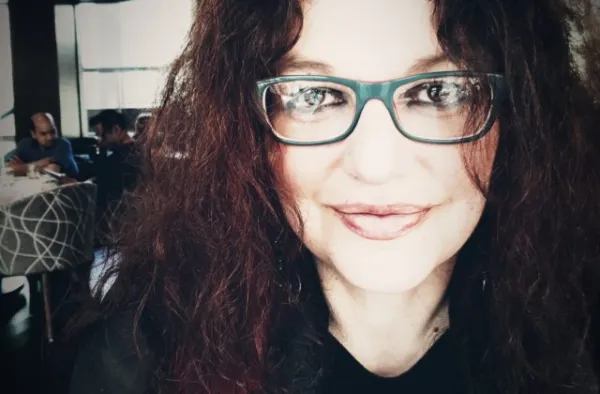
Manuela Ciotti is a social anthropologist with a unique scholarly profile informed by two major (and mutually enriching) research strands. The first consists of the study of inequality, identity politics and modernity in the struggle for social justice among subaltern communities in India. The second strand focuses on the politics of art, materiality and representation generated by the global circulation of art and material culture out of India, and the history of the art world from the standpoint of the global south. She is a passionate researcher and has pursued the above interests through many years of ethnographic fieldwork and archival research at very different physical and digital sites. These range from a village in north India to a museum in New York, the Venice Biennale archive and social media platforms, engaging interlocutors differently positioned across the caste, race, age, gender, religion, and class spectrums.
Manuela is the leader of the research team 'Sedimented visions': https://sedimented-visions.univie.ac.at
Her main research interests are as follows:
The anthropology of the future
Manuela is the PI of the ERC Advanced Grant 'The anthropology of the future: An art world perspective' (ANTHROFUTURE) (2024-2028). The future has been neglected as an object of anthropological study, even though our complex social, ecological and, with COVID-19, biopolitical crises demand novel imaginations of the ‘yet-to-come’. Moreover, anthropologists have urged the decolonisation of existing studies of the future that are often based in the global north’s concerns. ANTHROFUTURE shifts the focus of the anthropology of the future to the pandemic-induced acceleration of the future into the present. The project identifies the art world – historically featuring a high degree of experimentalism, a strong future-orientation, and, particularly in emerging markets in the global south, an openness to risk and speculation – as a crucial site for ground-breaking anthropological knowledge on the future.
What does it mean to display, circulate and sell art in the 21st century? And what does it mean to do this out of the global south?
The politics of presence produced by the circulation of modern and contemporary art out of India since the 2000s is at the core of my book monograph entitled Unmooring the nation: A global ethnography of the spread of modern and contemporary art from India. The book is the outcome of a research project started over a decade ago under the Framing the Global (FdG) initiative at Indiana University. For this project, I carried out fieldwork on five exhibitions (or series of them) held at biennales, museums and galleries in Asia, Europe and the USA and several digital spaces. Exhibitions are as follows: ‘The Empire strikes back: Indian art today’ (London, 2010), the India Pavilions at the Venice Biennale (2011-2019), the Mumbai Pavilion at the Shanghai Biennale (2012), the Kochi-Muziris Biennale (KMB) (2012-2022), and ‘After midnight: Indian modern and contemporary art 1947-1997’ at the Queens Museum in New York (2015).
The book argues that the terrains over which the politics around art from India is transacted in contemporary times and its ripple effect globally cannot be traced back to a single oppositional logic that pits the ‘postcolony’ against ‘Europe’. This is because the globalization of the art world has opened up a broader dialogue between ‘India and the rest’ – unsettling India’s historical geopolitical and economic interests. This leads to ‘nation’ being differently projected and spoken about according to the diverse locations in which art from India is exhibited and traded. While ‘nation’ is unmoored through the geographical movements of art, rather than disappearing, it re-configures itself under novel semblances by virtue of global art world dynamics in physical and digital spaces. Unmooring the nation is under contract with Indiana University Press.
Contemporary art circulation and exhibition; Postcolonial art and globalization; National identity in transnational art worlds