Hanse-Wissenschaftskolleg
Germany

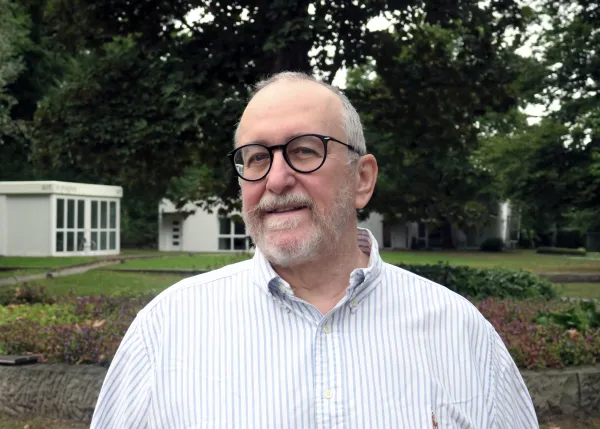
Carlos Eduardo de Rezende is a Full Professor at Universidade Estadual do Norte Fluminense Darcy Ribeiro (UENF) and has an extensive scientific background in Applied Ecology, Oceanography, and Environmental Sciences, with emphasis on the biogeochemistry of aquatic and coastal ecosystems. His research publications focus primarily on organic matter dynamics using carbon and nitrogen isotopes, trace metal cycling, and the biogeochemical functioning of mangroves, estuaries, and riverine systems, as well as material transfer processes at the land–ocean interface. His scientific work also addresses environmental quality, climate change impacts, coastal ecosystem conservation, and the transport and fate of pollutants in aquatic environments. Throughout his career, he has coordinated and participated in multidisciplinary research projects involving biogeochemistry, environmental monitoring, and ecosystem sustainability. His international experience includes scientific collaborations with universities and research institutes in the United States and Europe, particularly in Germany, focusing on the biogeochemistry of coastal and marine ecosystems, organic carbon dynamics, metal pollutants, and the conservation of aquatic environments. In the administrative sphere, he served as Vice-Rector, Dean of Undergraduate Studies, and Director of the Center for Biosciences and Biotechnology at UENF. He also participated as a key person in the establishment Environmental Sciences Laboratory – UENF and currently acts as Associate Editor for the journals Annals of the Brazilian Academy of Sciences, Clean Ocean, and PeerJ.
Mangrove forests are crucial for their ecological and socioeconomic value, offering services to humanity and habitat protection for economically important marine species. Despite their significance, mangroves are rapidly being destroyed worldwide. These ecosystems act as sinks and sources of organic matter (OM), biogeochemical barriers for pollutants, and are key for monitoring environmental changes. Our goal is to study the biogeochemistry of mercury (Hg), dissolved organic matter (DOM), and black carbon (BC) in mangroves, estuaries and rivers. Mercury, a global pollutant, has been used in gold mining and past sugarcane plantations in Brazil. BC from incomplete OM combustion, is prevalent due to widespread slash-and-burn practices. Both pollutants are transported by air and rivers. Brazil hosts the world's largest river, the Amazon, and the second-largest mangrove area. We will study 3 regions: the Amazon River estuary and mangroves in northern and southern Brazil, to test the hypothesis that the cycling and sources of combustion-derived OM and Hg are interconnected. These areas include largely unaltered basins and regions with diverse pollution sources in socioeconomically important coastal areas. In collaboration with the University of Oldenburg (Prof. T. Dittmar and Dr. M. Seidel) and Constructor University (Prof. A. Koschinsky), the project will leverage past and new data to quantify the differential impacts of human-derived pollutants on these mangrove systems.
Mangrove Ecology; Aquatic Biogeochemistry; Geochemistry and Environmental Contamination; Isotopic Ecology