
Netherlands Institute for Advanced Study in the Humanities and Social Sciences
Netherlands

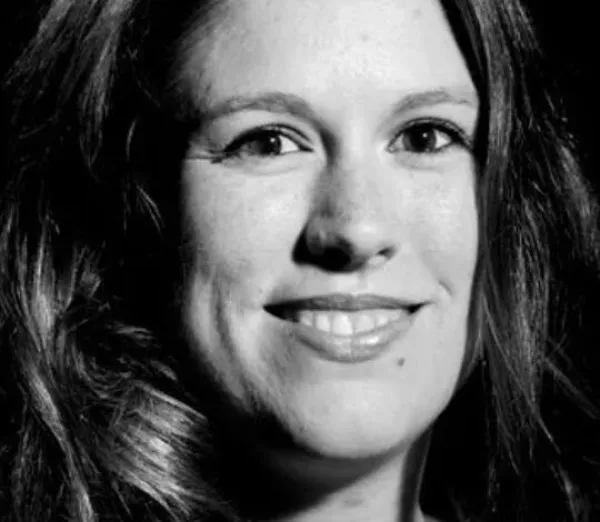
Katerina is a NIAS Theme Group Fellow (Why do adults change their beliefs?) during 2025-2026.
I am Katerina Manevska, assistant professor at the department of Political Science at Radboud University, Nijmegen, The Netherlands.
I am a cultural and political sociologist. I received my sociological training at the Autonomous University of Barcelona (UAB), Radboud University in Nijmegen and Erasmus University in Rotterdam. In 2014 I obtained my PhD degree at the Erasmus University with a dissertation on ethnocentrism, funded by the Netherlands Organization for Scientific Research. The cultural-sociological endeavor I embarked on in my PhD research, in which I applied this approach to study the way in which national contexts and interethnic contacts influence ethnocentrism, has formed the basis for my current (and future) research.
My main research interests are cultural and political change, representation, employment relations, and interethnic relations. I believe it is vital to place people’s subjective realities at the center of social scientific analysis and I happily take the challenge to do so using (mostly) quantitative methods.
While having a personal interest in issues concerning public opinion and politics, I believe that each and every part of society may lead to interesting and relevant research questions. Hence, I try to keep an ever open mind to all questions that may arise, not only while being ‘at the job’ but also, and importantly so, from everyday life.
In this project, Katerina Manevska studies under what individual and societal conditions adults change their beliefs about four issues: institutional trust, ethnic outgroups, gender identities, and economic redistribution.
She uses panel data from six different countries and combines these with data on societal characteristics such as issue salience and policy change.
Manevska’s project will benefit from the theoretical and empirical work of the theme group project Why do adults change their beliefs? It will add to the group project by theorising and testing the role of individual factors, to get a better understanding of when, where and for which groups of people belief change throughout adulthood is likely to take place.
cultural and political change; social attitudes and diversity; belief formation; cross-national comparative research; representation; employment relations; interethnic relations