Netherlands Institute for Advanced Study in the Humanities and Social Sciences
Netherlands


Paul is a NIAS Theme Group Fellow (Why do adults change their beliefs?) during 2025-2026.
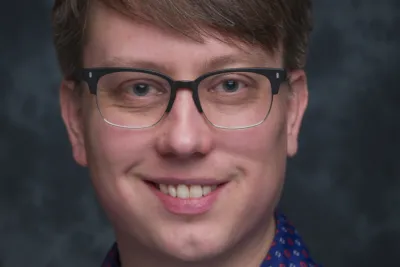
Dr Paul V. Khiatani is a Research Assistant Professor in the Department of Applied Social Sciences at The Hong Kong Polytechnic University. Prior to July 2022, he was a postdoc at the City University of Hong Kong (CityU), where he also received his PhD in Sociology in February 2020. During his PhD, he was a Visiting Fellow (May – July 2018) at the Sydney Democracy Network, The University of Sydney.
Paul’s research interests include social and political participation (such as volunteering, protests, and collective actions), youth studies and emerging adults, organized crime and street gangs, and deviant (or counter-normative) behaviors. More broadly, Paul is keen on exploring puzzles and paradoxes of human relations and selfhood that naturally emerge from our contemporary (and often absurd) arrangements of social life. Possessing a strong inclination to adopt interdisciplinary approaches, and being a proponent of methodological pluralism, he continues to embrace an inquiry-driven tradition to research.
Paul has been involved in grant-writing and active management of funded projects since he was a PhD student. Notably, for example, he was a Co-PI for an interdisciplinary project on the marginalization of children in Hong Kong (2017 – 2018), funded by Save the Children Hong Kong. He also played a leading role in securing and successfully completing projects funded by the General Research Fund (Research Grants Council, UGC) and Public Policy Research (Policy Innovation and Co-ordination Office).
His work has been published in various academic outlets, including, but not limited to, British Journal of Social Work, Punishment & Society, Child Indicators Research, The Social Science Journal, Journal of Interpersonal Violence, Deviant Behavior, Innovations in Education and Teaching International, and Citizenship Teaching & Learning. Oftentimes supported by a competitive funding/grant or sponsorship vis-à-vis personal invitation, he has presented his work in a variety of academic conferences around the world.
Paul tries to be as active as possible in local and academic communities. For example, locally, he served as Executive Committee Member (and Head of Social Services) of the Sir Edward Youde Scholars Association (2020 – 2022). During his time as a PhD student, he also worked with City-Youth Empowerment Project (CYEP), CityU. At CYEP, he was involved in various research and teaching projects (with a group of really passionate staff and volunteers!), reaching out and impacting communities locally as well as internationally (e.g., in Myanmar, Indonesia, and Taiwan). In academic circles, he serves as a peer-reviewer for several journals, and acts as an award/grant reviewer for a couple of international associations. He is also a Managing Editor of Bandung: Journal of the Global South.
Insofar as time permits, Paul is open to discussing with people (regardless of academic level and disciplinary background) about opportunities to work together on overlapping areas of interest. Whether a partnership/collaboration results from the discussion or not is beside the point; connecting ideas and people is what matters most to him.
Research question: How, for whom, and under what conditions does adult belief change take place?
Belief change later in life remains an understudied phenomenon, as it challenges the long-held assumption that political attitudes are formed early and remain relatively stable. While recent studies have documented instances of belief change among adults, they tend to be largely descriptive, offering limited insight into the underlying mechanisms. In other words, we know that such change can occur—but we lack understanding of when, why, or how it happens.
Together with Katerina Manevska and Mark Brandt, Paul Khiatani will explore these questions during their Theme Group Fellowship. By employing new theoretical frameworks and methodological approaches, this initiative aims to establish a robust research agenda on this socially significant topic.
Adult belief change; political attitude formation and stability; mechanisms of attitude change; lifespan political psychology; cognitive flexibility in adulthood